

The Science of Safety: Understanding Evidence-Based Risk Assessments
Evidence-Based Risk Assessments: Top 5 Powerful Benefits

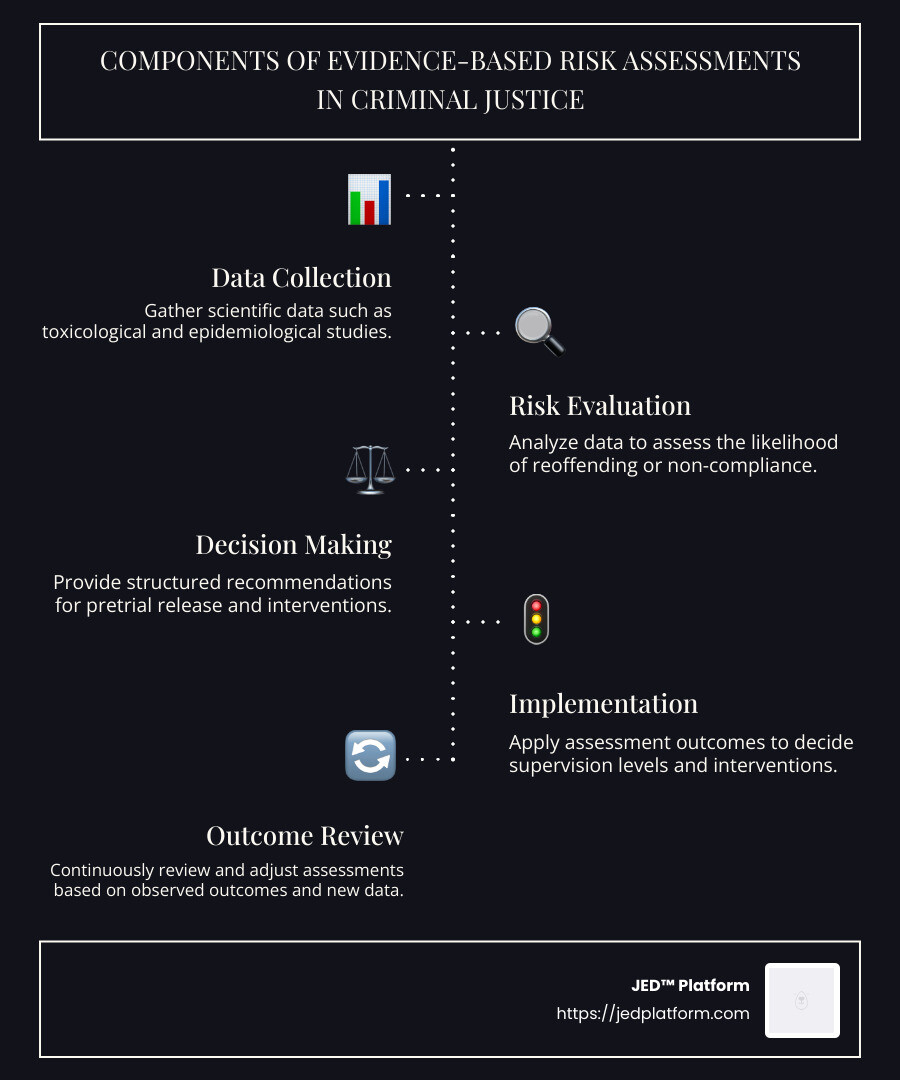
Evidence-based risk assessments are essential tools in the criminal justice system, used to systematically evaluate the likelihood of individuals reoffending or failing to comply with judicial requirements. These assessments are based on a blend of scientific data, such as toxicological and epidemiological studies, combined with practical insights to ensure fair and informed decision-making. Here’s a quick summary:
- What it means: Using scientific methods and data to evaluate risk.
- Primary aim: Improve accuracy in decision-making within the justice system.
- Application: Helps determine supervision levels pretrial and post-conviction.
- Benefits: Improves fairness, transparency, and resource allocation.
Risk assessments guide criminal justice agencies by providing a structured approach to evaluating individuals awaiting trial. This process allows for informed decisions about their release and contributes to public safety by predicting and preventing potential risks.
Considering the complexities, risk assessment becomes more reliable when grounded in evidence. It’s this scientific grounding that helps balance justice and safety, particularly for those awaiting their day in court.
Evidence-based risk assessments terms made easy:
– alternatives to pretrial detention
– pretrial release options
What is Evidence-Based Risk Assessment?
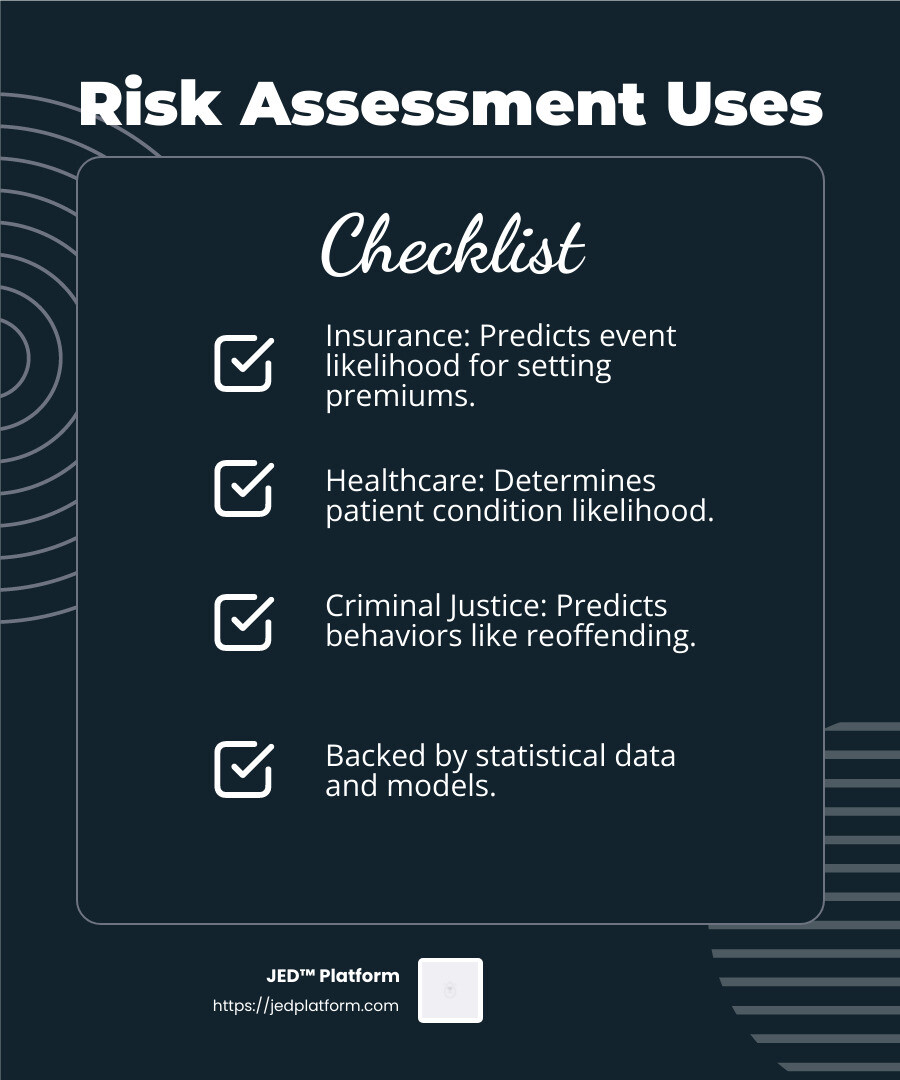
Evidence-based risk assessments are like the GPS of decision-making. They help guide us with precision, whether we’re navigating insurance, healthcare, or criminal justice.
Precision Insurance
Imagine you’re an insurance company. You need to predict the likelihood of an event, like a car accident, to set premiums. This is where evidence-based risk assessments come into play. By using detailed data and statistical models, insurers can make more accurate predictions. This approach isn’t just about crunching numbers; it’s about understanding the nuances of risk. Think of it as using a high-definition map rather than a vague sketch to find your way.
Clinical Outcomes
In healthcare, evidence-based risk assessments help predict clinical outcomes. For example, doctors use these assessments to determine the likelihood of a patient developing a condition based on various factors like age, lifestyle, and genetics. This method improves patient care by allowing for personalized treatment plans. It’s like having a custom suit instead of a one-size-fits-all outfit, ensuring a better fit for each individual’s needs.
Actuarially Sound
Being “actuarially sound” means the assessment is backed by statistical data and mathematical models. It’s not just a guess; it’s a calculated prediction. In the criminal justice system, this means using data to predict behaviors, like the likelihood of reoffending. This helps in making fairer decisions about things like pretrial release. It’s the difference between using a crystal ball and a calculator—one is based on whimsy, the other on solid numbers.
In summary, evidence-based risk assessments are all about using data and science to make better decisions. Whether in insurance, healthcare, or justice, they provide a clearer picture, helping to ensure fairness and accuracy in outcomes.
Types of Risk Assessment
When it comes to understanding risk assessments, know that they come in different flavors. Each type plays a unique role in evaluating and managing risks. Let’s break down the four main types: qualitative, quantitative, subjective, and objective.
Qualitative Risk Assessment
Qualitative risk assessments are about getting a general sense of risk without diving into numbers. Think of it as using a weather forecast that tells you it’s “likely to rain” instead of giving a 70% chance. This method relies on descriptive terms and expert judgment to evaluate risks as low, medium, or high.
- Pros: Quick and easy to implement. Great for initial assessments.
- Cons: Can be subjective and less precise.
Quantitative Risk Assessment
Quantitative risk assessments, on the other hand, are all about the numbers. This approach assigns numerical values to risks, often using statistical data and mathematical models. It’s like calculating the exact odds of rain tomorrow, allowing for a more precise evaluation.
- Pros: Provides clear, data-driven insights. Ideal for detailed analysis.
- Cons: Requires reliable data and can be time-consuming.
Subjective Risk Assessment
Subjective risk assessments depend heavily on personal judgment and experience. This approach might involve asking experts to weigh in on the likelihood of certain risks. It’s like relying on a seasoned sailor’s intuition to steer stormy seas.
- Pros: Leverages expert knowledge and intuition.
- Cons: Can vary greatly between individuals and lacks standardization.
Objective Risk Assessment
Objective risk assessments aim to minimize personal bias by using standardized criteria and methods. This approach is like using a checklist to ensure all safety protocols are followed, providing consistency across evaluations.
- Pros: Reduces bias and improves consistency.
- Cons: May overlook unique, context-specific insights.
Understanding these types of risk assessments is crucial for choosing the right approach based on the situation at hand. Whether you need the quick insights of a qualitative assessment or the detailed precision of a quantitative one, knowing the strengths and limitations of each type helps in making informed, evidence-based decisions.
The Role of Evidence-Based Risk Assessments in Criminal Justice
Evidence-based risk assessments play a crucial role in the criminal justice system by helping officials make informed decisions at various stages, especially when it comes to pretrial release. These assessments aim to predict the likelihood of an individual reoffending or failing to appear in court. This is not just about keeping communities safe but also about ensuring fairness in the justice process.
Pretrial Release and Decision-Making
Imagine a scenario where someone is arrested and awaiting trial. The decision to release them or keep them in custody is critical. Here, risk assessments come into play. They use data-driven methods to evaluate the risk level of each individual. By doing so, they help judges and other officials make decisions that balance public safety with the rights of the accused.
-
Risk Scores: These scores are generated through actuarial methods, which means they are based on statistical data rather than personal judgment. A higher risk score might suggest that an individual is more likely to reoffend or skip court dates, leading to more stringent pretrial conditions.
-
Interventions: For those identified as high-risk, targeted interventions can be recommended. These might include electronic monitoring, increased supervision, or mandatory participation in treatment programs. The goal is to address specific areas of risk and reduce the likelihood of future offenses.
Benefits of Using Risk Assessments
The use of evidence-based risk assessments in criminal justice offers several benefits:
-
Consistency: By relying on data rather than subjective judgment, these assessments ensure consistent decision-making across different cases and jurisdictions.
-
Efficiency: Limited resources can be focused on individuals who pose the greatest risk, optimizing the allocation of supervision and intervention efforts.
-
Effectiveness: Research shows that when implemented correctly, risk assessments can reduce recidivism rates and improve outcomes for justice-involved individuals.
In conclusion, evidence-based risk assessments are valuable tools that improve the criminal justice process. They provide a structured way to evaluate risk, guiding decisions that impact both individual lives and community safety. As the justice system continues to evolve, these assessments are likely to become even more integral to ensuring fair and effective outcomes.
Benefits of Evidence-Based Risk Assessments
Evidence-based risk assessments offer a host of benefits that improve decision-making processes, especially in the criminal justice system. They streamline operations by ensuring consistency, boosting efficiency, increasing effectiveness, and optimizing resource allocation.
Consistency
One of the primary advantages of evidence-based risk assessments is the consistency they bring to decision-making. By using data-driven methods, these assessments eliminate the variability that comes with subjective judgment. This means that similar cases are more likely to receive similar outcomes, enhancing fairness and credibility across the board. As noted in research, systematic risk assessment improves the defensibility of decisions, making them more transparent and reliable.
Efficiency
When resources are often limited, efficiency is key. Evidence-based risk assessments allow criminal justice systems to focus their efforts where they are most needed. By identifying individuals who pose the greatest risk, these assessments help allocate supervision and intervention resources more effectively. This approach not only saves time and money but also ensures that high-risk individuals receive the attention they require.
Effectiveness
The effectiveness of evidence-based risk assessments lies in their ability to improve outcomes. By using empirically valid tools, practitioners can tailor interventions to address specific risks, ultimately reducing reoffending rates. For instance, targeted interventions such as electronic monitoring or mandatory treatment programs can be deployed for high-risk individuals, addressing potential issues before they escalate. Research shows that these detailed assessments can lead to better compliance and safer communities.
Resource Allocation
Optimal resource allocation is another significant benefit. Evidence-based risk assessments guide the distribution of limited resources, ensuring they are used where they can have the greatest impact. This strategic allocation not only improves the efficiency of the criminal justice system but also improves public safety by focusing on preventing future offenses.
In summary, evidence-based risk assessments are invaluable in creating a more consistent, efficient, and effective criminal justice system. They ensure that resources are allocated wisely, improving outcomes for individuals and communities alike.
Frequently Asked Questions about Evidence-Based Risk Assessments
What is an evidence-based risk assessment?
An evidence-based risk assessment is a systematic approach that uses data and empirical evidence to evaluate the likelihood of certain outcomes. In the context of criminal justice, it helps determine the risk of reoffending or non-compliance with legal requirements. By relying on data rather than subjective judgment, these assessments aim to provide fair and consistent evaluations.
For example, risk assessments are used in the pretrial phase to decide if someone can be safely released into the community. They are also used by probation and parole departments to set supervision levels. The goal is to ensure that decisions are informed by reliable data, leading to better outcomes for individuals and society.
What are the 4 types of risk assessment?
Risk assessments can be grouped into four main types:
-
Qualitative Risk Assessment: This involves subjective judgments to evaluate risks based on non-numerical data. It often uses categories like “high,” “medium,” or “low” to describe risk levels.
-
Quantitative Risk Assessment: This type uses numerical data and statistical methods to calculate risk levels. It provides more precise measurements, which can be particularly useful in complex situations.
-
Subjective Risk Assessment: Similar to qualitative assessments, these rely heavily on personal judgment and experience. They can be influenced by individual biases and may lack consistency.
-
Objective Risk Assessment: This approach uses standardized methods and objective data to minimize bias. It’s aimed at providing consistent and reproducible results.
What are the 5 things a risk assessment should include?
To be effective, a risk assessment should cover these five key elements:
-
Identify Hazards: Determine what could potentially cause harm. This could be anything from environmental factors to behavioral risks.
-
Evaluate Risks: Assess the likelihood and impact of each hazard. This helps prioritize which risks need the most attention.
-
Implement Controls: Decide on measures to mitigate identified risks. This might involve supervision, electronic monitoring, or other interventions.
-
Document Findings: Keep a detailed record of the assessment process and decisions made. This improves transparency and accountability.
-
Review and Update: Regularly revisit and revise the assessment to ensure it remains relevant and effective over time.
By understanding and applying these components, evidence-based risk assessments can significantly improve decision-making processes, particularly in criminal justice settings. They provide a structured approach to managing risks, ensuring that resources are used effectively to improve public safety.
Conclusion
At JED™ Platform, we believe in the power of evidence-based risk assessments to transform the criminal justice system. Our pretrial software is designed to provide fair and reliable risk assessments, helping individuals awaiting trial in Mt. Pleasant, South Carolina, and beyond.
Our approach is rooted in the principles of consistency, efficiency, and effectiveness. By using data-driven insights, we ensure that each assessment is not only fair but also custom to the unique circumstances of each case. This means better outcomes for individuals and a safer community for all.
Our commitment to fairness is reflected in our pretrial diversion programs. These programs are designed to assist individuals by offering monitoring services that align with their risk levels, ensuring that they can safely integrate into the community while awaiting trial.
By leveraging cutting-edge technology and empirical evidence, JED™ Platform is at the forefront of creating a more equitable justice system. We understand that each decision made during the pretrial phase can have lasting impacts, and we’re here to make sure those decisions are informed by the best available data.
Explore how our solutions can make a difference in your community. Learn more about our services and how we can support fair risk assessments here.
Our location in Mt. Pleasant, South Carolina, serves as a hub for innovation and excellence in pretrial software. We are proud to be part of a community that values justice and fairness, and we are dedicated to contributing to a safer, more just society.