

What to Expect: Starting Salaries for Probation Officers
What is the Starting Salary for a Probation Officer 2024 Guide

What is the starting salary for a probation officer? If you’re eager to start a career where you can positively impact communities and support rehabilitation, this is a crucial question to answer. The starting salary for a probation officer varies, but here’s what you can typically expect:
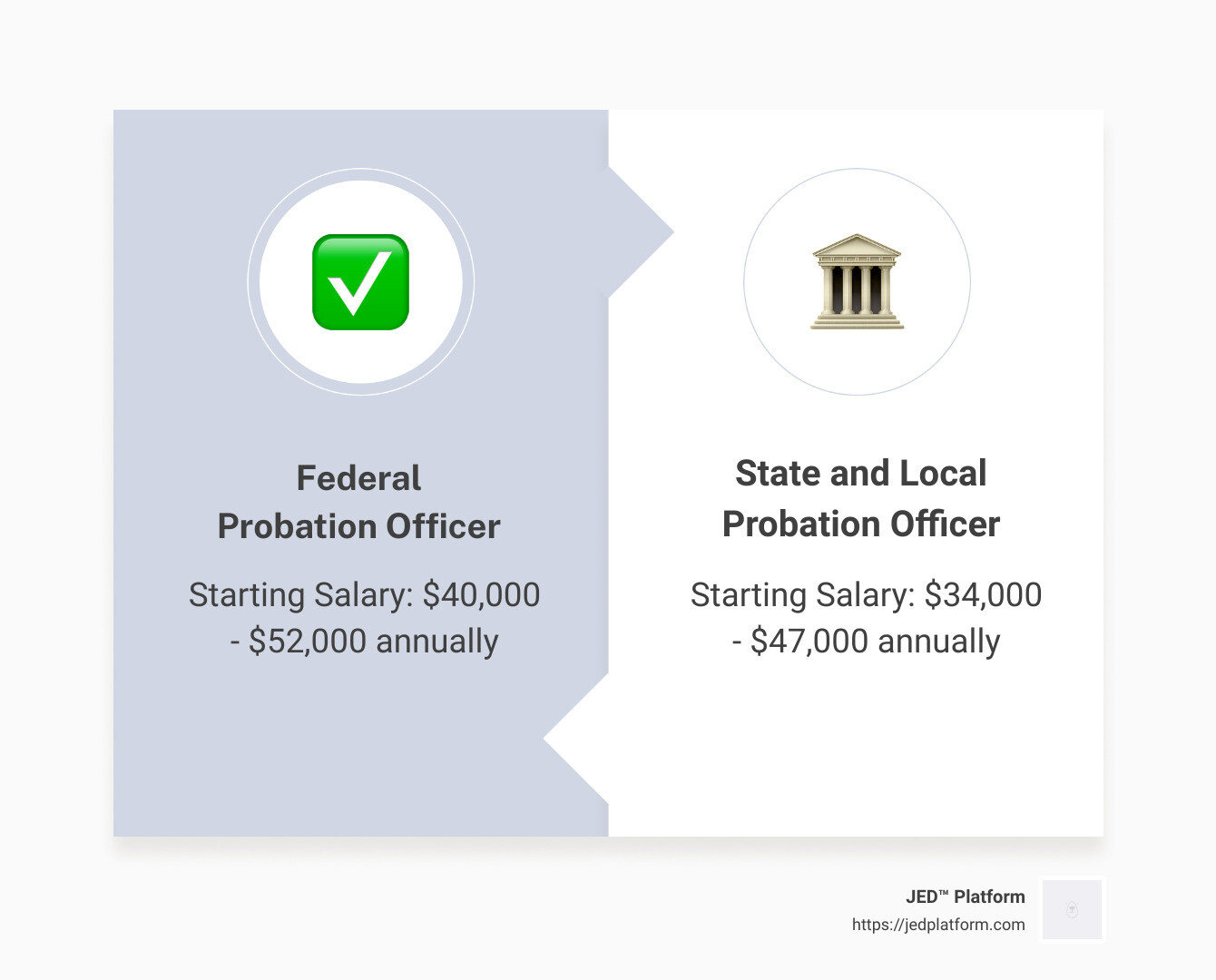
- Federal Probation Officer: Starting around $40,000 – $52,000 annually
- State and Local Probation Officers: Typically starting between $34,000 – $47,000 annually depending on the location and level of experience
Probation officers are essential in the correctional system, playing a key role in community supervision. With over 90,000 professionals nationwide, their job is not only about monitoring probationers but also supporting their journey toward positive change. These officers often have backgrounds in law enforcement or related fields and work tirelessly to reduce crime and improve public safety.
The demand for probation officers continues to offer rewarding career opportunities, with competitive starting salaries that reflect their indispensable service to society. As professionals tasked with balancing enforcement and guidance, they embody a commitment to community welfare.
What is the starting salary for a probation officer word list:
– how to become a probation officer career and salary information
– what is the salary of a probation officer
– probation officer salary by state
What is the Starting Salary for a Probation Officer?
Probation officers play a vital role in the correctional system, focusing on community supervision and helping individuals reintegrate into society. Understanding what is the starting salary for a probation officer is essential for anyone considering this career path.
Average Salary
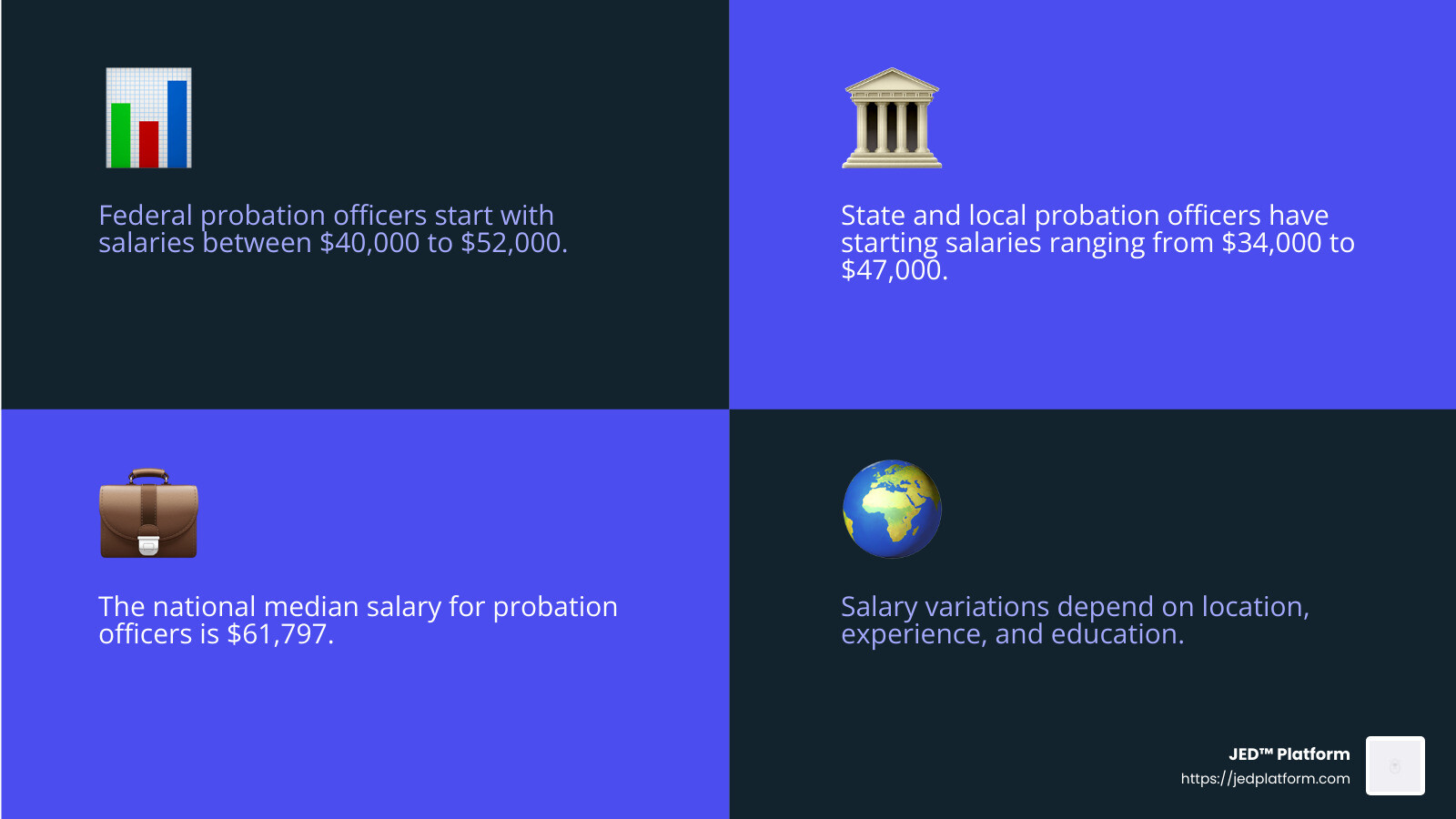
In 2023, the national median salary for probation officers was $61,797. This figure provides a snapshot of what professionals in this field typically earn. However, starting salaries can be quite different from the median, reflecting various factors like location and experience.
Starting Salary
-
Federal Probation Officers: These roles often come with a starting salary ranging from $40,000 to $52,000 annually. Federal positions usually offer higher starting pay due to the stringent qualifications and additional training required.
-
State and Local Probation Officers: Starting salaries for these positions generally fall between $34,000 and $47,000 per year. The variation depends on the state, locality, and specific job requirements.
Salary Range
The overall salary range for probation officers expands from about $41,704 to $105,227 annually. This wide range reflects differences in job responsibilities, geographic areas, and levels of experience and education.
Probation officers are more than just enforcers; they are mentors committed to fostering positive change. Their work ensures public safety while supporting individuals on probation. As you consider a career as a probation officer, keep in mind the starting salaries and the potential for growth within this impactful field.
Factors Influencing Probation Officer Salaries
Probation officer salaries can vary widely. Several factors influence how much a probation officer earns. Let’s take a closer look at these key factors.
Education
Education plays a significant role in determining salary. Most probation officers have at least a bachelor’s degree in fields like criminal justice, psychology, or social work. Higher education levels can lead to better pay. For instance, a master’s degree might open doors to supervisory positions or specialized roles, which typically offer higher salaries.
Experience
Experience is another crucial factor. New probation officers usually start at the lower end of the salary scale. As they gain experience, their earning potential increases. Experienced officers may also have opportunities for promotions, which can lead to higher pay. For example, those with several years of service might advance to senior or supervisory roles, where salaries are more substantial.
Location
Where you work matters. Salaries for probation officers can differ based on geographic location. Urban areas or regions with a higher cost of living often offer higher salaries to attract qualified candidates. For instance, probation officers in New York might earn more than those in rural areas due to the higher living expenses and demand for skilled professionals.
Qualifications
Specific qualifications and certifications can also impact salaries. Federal probation officers, for example, need to meet stringent qualifications and undergo specialized training. These roles often come with higher starting salaries compared to state or local positions. Additionally, certifications in areas like substance abuse counseling can improve an officer’s skill set and increase earning potential.
Understanding these factors can help aspiring probation officers steer their career paths and salary expectations. As you consider this rewarding career, keep in mind how education, experience, location, and qualifications can influence your salary.
Salaries for Federal Probation Officers
Federal probation officers play a critical role in the U.S. correctional system. They are federal law enforcement officers, responsible for supervising offenders who have been granted probation at the federal level. This position comes with specific requirements and a structured salary range.
Federal Law Enforcement and Training
To become a federal probation officer, candidates must meet strict qualifications. This includes having a bachelor’s degree in fields such as criminal justice, sociology, or psychology, and at least one year of relevant experience. Additionally, candidates must complete a six-week training program at the Federal Law Enforcement Training Center in Charleston, South Carolina. This training covers federal probationary protocols and prepares officers for their duties.
Salary Range
Federal probation officers typically start their careers within the CL25/26 salary range. Here’s a breakdown of what you can expect:
- CL25:
- Developmental Range: $38,004 – $46,767
-
Full Performance Range: $47,529 – $60,864
-
CL26:
- Developmental Range: $41,865 – $51,921
- Full Performance Range: $52,340 – $67,005
These base salaries can be significantly higher due to locality pay. For example, in urban areas like Chicago, officers can earn between $10,000 and $18,000 more annually than the base pay.
As officers advance in their careers, they may reach the CL27/28 levels, which offer higher salaries:
- CL27:
- Developmental Range: $44,164 – $55,204
-
Full Performance Range: $55,664 – $71,764
-
CL28:
- Developmental Range: $52,919 – $66,167
- Full Performance Range: $66,719 – $86,039
In high-cost areas like Washington D.C., the salary can increase by as much as $20,000 due to locality adjustments.
Benefits
Besides competitive salaries, federal probation officers enjoy extensive benefits. These include health insurance, retirement plans, and life insurance, among others. Such benefits add to the overall compensation package, making these positions highly desirable.
Federal probation officer positions offer a structured career path with opportunities for advancement and salary growth. The combination of competitive pay, comprehensive benefits, and the chance to make a positive impact on society makes this a rewarding career choice.
Salaries for State and Local Probation Officers
State and local probation officers also play a vital role in the correctional system, working directly within their communities. Their salaries can vary widely based on location, experience, and other factors.
State Salaries
Probation officer salaries at the state level can differ significantly from one state to another. For example, in New York, the median salary for probation officers was reported to be $66,120 in 2012. This figure is likely higher today, reflecting general salary trends.
- New York: Starting salaries for various roles, such as Parole Officer or Facility Parole Officer, can range from $34,260 to $52,643. These figures highlight the variability based on specific job titles and responsibilities.
In states with a higher cost of living, salaries tend to be higher to compensate for the increased expenses. However, these adjustments can vary, so check specific state data when considering a position.
Local Salaries
Local probation officer salaries can also vary within a state. Urban areas often offer higher pay than rural locations due to the increased cost of living and demand for probation services. For instance, probation officers in cities may earn significantly more than their counterparts in smaller towns.
- Example: In some urban areas, probation officers can earn upwards of $10,000 more annually than those in rural settings. This is due to locality pay adjustments similar to those seen in federal positions.
Salary Comparison
When comparing state and local salaries, it’s crucial to consider factors such as cost of living, job demand, and budget allocations for public safety roles. Salaries can also be influenced by the level of experience and education of the probation officer.
-
Job Demand: In states with higher crime rates or larger populations, there may be more funding allocated for probation services, potentially leading to higher salaries.
-
Experience and Education: Officers with advanced degrees or significant experience may command higher salaries, regardless of their state or local setting.
Overall, while state and local probation officer salaries can vary, they generally offer a stable and rewarding career path with opportunities for growth. Understanding these variations is key for anyone considering a career in this field.
Frequently Asked Questions about Probation Officer Salaries
What is the top salary for a probation officer?
Probation officers can earn a wide range of salaries, with the top earners making impressive figures. According to data from the U.S. Bureau of Labor Statistics (BLS), the highest annual salary for probation officers in 2023 was about $105,227. This top salary is often reached by officers with significant experience, advanced education, and those who hold supervisory or specialized positions.
Promotional opportunities can also influence salaries. As probation officers gain experience, they might move into higher-paying roles such as senior probation officers or supervisors, which offer increased responsibilities and higher pay.
How much do probation officers make in different states?
Salaries for probation officers vary significantly across states due to differences in cost of living, demand for probation services, and state budgets for public safety roles. For instance, California is one of the top-paying states, with probation officers earning around $91,760 annually. Other high-paying states include New Jersey and New York, with salaries averaging $71,420 and $71,280, respectively.
Here’s a quick look at some state comparisons:
- California: $91,760
- New Jersey: $71,420
- New York: $71,280
- Iowa: $69,570
- Massachusetts: $68,460
In contrast, states with a lower cost of living may offer lower salaries. It’s essential for aspiring probation officers to consider these variations when exploring job opportunities across the country.
What qualifications are needed to become a probation officer?
Becoming a probation officer typically requires a combination of education and experience. Most entry-level positions require at least a bachelor’s degree in fields like criminal justice, psychology, or social work. Some states might also require prior experience in corrections, law enforcement, or social services.
Education Requirements:
- Bachelor’s Degree: Most common requirement, typically in criminal justice or a related field.
- Advanced Degrees: While not always required, a master’s degree can be advantageous for career advancement.
Experience:
- Relevant Experience: Experience in related fields such as parole, corrections, or social work can be beneficial.
- Training Programs: Some states offer specific training programs for probation officers, which can improve skills and job readiness.
Overall, the path to becoming a probation officer involves a mix of formal education and practical experience, providing a foundation for a rewarding career in community supervision.
Conclusion
As we’ve explored, the career of a probation officer offers a range of salary expectations and opportunities for growth. While the starting salary for a probation officer can vary based on factors like location and experience, it provides a solid entry point into a meaningful and impactful profession.
Probation officers play a crucial role in our criminal justice system, ensuring community safety and facilitating offender rehabilitation. They bring about positive change by guiding individuals on probation towards better life choices. The path to becoming a probation officer typically involves obtaining a relevant bachelor’s degree and gaining experience in related fields, setting the stage for a rewarding career.
At JED™ Platform, we understand the importance of supporting individuals in the criminal justice system. Our pretrial diversion programs offer fair assessments and monitoring services, helping individuals awaiting trial. For those considering a career as a probation officer, understanding salary expectations is vital. You can learn more about our services and how we support the criminal justice community by visiting our JED™ Platform service page.
In summary, a career as a probation officer not only promises a stable salary but also offers the chance to make a significant difference in society. Whether you’re just starting out or looking to advance, this field provides numerous opportunities for personal and professional growth.