

From Aspiration to Occupation: Becoming a Probation Officer
How to Become a Probation Officer Career and Salary Information in 2024: Ultimate Guide to Success
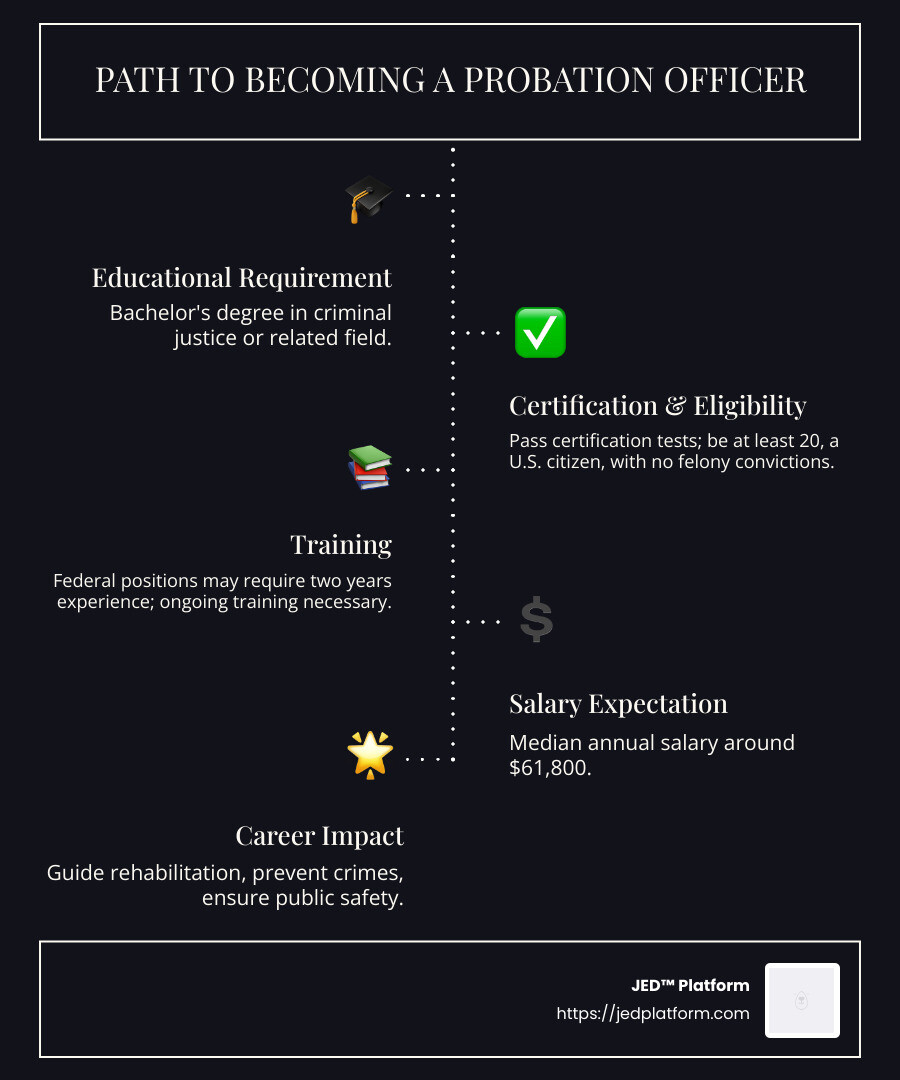
How to become a probation officer career and salary information can be quite straightforward with the right guidance. If you’re considering a career path in probation services, here’s a quick overview to get you started:
- Educational Requirement: A bachelor’s degree in criminal justice, social work, psychology, or a related field is essential.
- Certification and Eligibility: Some states require certification tests; you’ll need to be at least 20 years old, a U.S. citizen, with no felony convictions.
- Training: Federal positions might require two years of experience, and ongoing training is a must.
- Salary Expectation: The median annual salary is around $61,800.
Infographic: Path to Becoming a Probation Officer—Educational and Certification Steps, Training Necessities, Salary Insights
Starting on a career in the field of criminal justice as a probation officer offers a unique chance to make a meaningful impact on individuals’ lives and public safety. Imagine guiding an offender towards rehabilitation, preventing further crimes, and ultimately contributing to community well-being. It’s not just a job; it’s a commitment to public service and societal betterment. As the need for probation officers rises, driven by increasing employment growth beyond the national average, it’s a promising and noble career choice.
How to become a probation officer career and salary information glossary:
– what is the salary of a probation officer
– average salary for oklahoma probation officer
– probation officer salary ny
Educational Requirements for Probation Officers
To become a probation officer, a solid educational foundation is key. The journey typically begins with obtaining a bachelor’s degree. This degree can be in criminal justice, criminology, or a related field like social work or psychology. These areas of study equip aspiring probation officers with the knowledge needed to steer the complexities of the criminal justice system and effectively support offenders in their rehabilitation process.
Why Criminal Justice or Criminology?
A degree in criminal justice or criminology provides a comprehensive understanding of the legal system, crime prevention, and rehabilitation strategies. These programs often cover topics such as:
- Law Enforcement Principles: Understanding the roles and responsibilities of various law enforcement agencies.
- Corrections and Rehabilitation: Learning about the correctional system and methods to rehabilitate offenders.
- Criminal Law: Gaining insights into the legal procedures and laws affecting the criminal justice system.
- Psychology and Sociology: Exploring human behavior and social dynamics, which are crucial in assessing and guiding probationers.
Flexibility in Degree Choice
While a degree in criminal justice or criminology is preferred, there’s flexibility in the educational path. Degrees in social work or psychology are also valued, as they provide skills in counseling and understanding human behavior—both essential in working with diverse offender populations.
Continuing Education and Certification
Post-degree, probation officers may need to undergo certification, depending on the state. This often involves additional training and passing a certification test. Continuous education is also important, as officers must stay updated on the latest practices and legal changes in the field.

This educational journey not only prepares you for the role but also sets the foundation for a rewarding career in supporting individuals and enhancing community safety.
How to Become a Probation Officer: Career and Salary Information
Training and Experience
After completing your bachelor’s degree, the next step in the probation officer career is gaining practical experience. This often starts with an internship or practicum. These opportunities allow you to work alongside experienced officers, learning the ropes of community supervision and offender rehabilitation.
Training doesn’t stop there. Once hired, you might undergo additional skill training. This can include learning how to write detailed reports, conduct risk assessments, or use specific assessment tools. Some states also require new officers to pass certification exams. This ensures you’re ready to handle the complex situations you’ll face on the job.
Experience matters. Federal probation officer positions typically require at least two years of work experience. This experience can be gained through roles in corrections, social work, or a related field. It’s not just about checking boxes; it’s about developing the skills needed to support offenders and keep communities safe.
Salary Expectations
Probation officer salaries can vary based on location, experience, and level of responsibility. According to the U.S. Bureau of Labor Statistics, the median annual salary for probation officers and correctional treatment specialists was $59,860 as of May 2022. However, this is just a midpoint.
- Entry-level positions might start lower, but there’s room for growth.
- Top earners in the field can make over $80,000 annually, especially in high-demand areas or federal positions.
- Factors like city, state, and years of experience can significantly influence your salary.
For example, top-paying cities and metro areas often offer higher salaries to attract qualified candidates. It’s important to consider these factors when planning your career path.
While salary is important, the probation officer career offers more than just a paycheck. It’s a chance to make a difference in the lives of others and contribute to community safety.
Job Responsibilities of Probation Officers
Probation officers play a crucial role in community supervision. They ensure that individuals on probation comply with the conditions set by the court. This involves a mix of monitoring, support, and intervention to help probationers reintegrate into society successfully.
Community Supervision
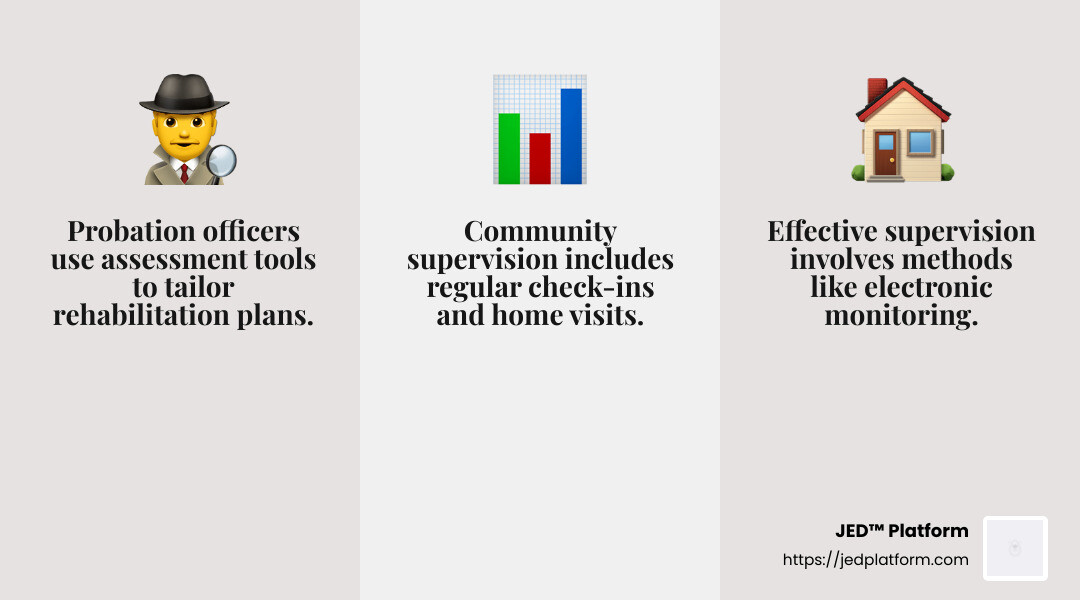
Community supervision is at the heart of a probation officer’s duties. Officers work closely with probationers, guiding them through their rehabilitation journey. This can include regular check-ins, home visits, and maintaining open communication with the probationer’s family or friends.
The goal is to encourage positive behavioral changes and ensure compliance with legal requirements. Probation officers often act as mentors, helping probationers find resources like job training or counseling services.
Assessment Tools
Probation officers use various assessment tools to evaluate the risks and needs of each probationer. These tools help officers create personalized rehabilitation plans. For instance, a standard assessment might identify if a probationer needs substance abuse treatment or educational programs.
These assessments are crucial. They ensure that probationers receive the right support and interventions. By understanding each individual’s unique situation, officers can tailor their approach to maximize the chances of successful rehabilitation.
Supervision Techniques
Effective supervision involves a range of techniques. Probation officers might use urinalysis testing to monitor substance use or electronic monitoring to track a probationer’s movements. They can also employ more supportive methods, like connecting probationers with community resources or arranging educational programs.
In Texas, for example, probation officers might use intensive supervision probation or day reporting centers to keep probationers on track. These techniques provide structure and accountability, helping individuals stay focused on their rehabilitation goals.
Probation officers are not just enforcers; they are key players in the rehabilitation process. By using a combination of assessment tools and supervision techniques, they help individuals make positive changes and contribute to safer communities.
Probation Officer Career Growth and Opportunities
Becoming a probation officer can lead to a fulfilling career with opportunities for growth and advancement. Let’s explore the employment growth, career advancement, and job outlook for this profession.
Employment Growth
The role of probation officers is essential in the criminal justice system. According to the U.S. Bureau of Labor Statistics, the employment of probation officers and correctional treatment specialists is expected to grow by 3% from 2022 to 2032. This growth rate aligns with the average for all occupations, indicating steady demand for these professionals.
In Texas, the outlook is even more promising. The number of probation officers is projected to increase by 29% between 2008 and 2018, which is significantly higher than the national average. This rise is driven by the state’s focus on community supervision as an alternative to incarceration.
Career Advancement
Probation officers can advance their careers by gaining experience and pursuing additional training. Starting as a probation officer, you can move up to supervisory roles, such as Parole Officer III, IV, or V. Each level comes with increased responsibilities and higher salaries. For example, as of September 2024, a Parole Officer V can earn a monthly salary of up to $6,117.03.
Specializing in specific areas, like juvenile offenders or substance abuse cases, can also open doors to career advancement. Specialized training can make you a valuable asset to your department and increase your chances of promotion.
Job Outlook
The job outlook for probation officers is stable, with consistent demand for skilled professionals. As communities continue to prioritize rehabilitation and community supervision over incarceration, the need for probation officers is likely to remain strong.
Probation officers play a crucial role in reducing recidivism and supporting individuals in their transition back into society. This makes them an integral part of the criminal justice system, ensuring public safety and providing guidance to those on probation.
Overall, a career as a probation officer offers opportunities for growth and the chance to make a meaningful impact on individuals and communities. With the right training and experience, you can advance your career and contribute to safer, more supportive environments for those under community supervision.
Frequently Asked Questions about Becoming a Probation Officer
What degree is best for a probation officer?
To become a probation officer, a bachelor’s degree is usually required. Most employers prefer degrees in criminal justice or criminology. These fields provide a solid understanding of the criminal justice system, which is essential for the role. A degree in social work or psychology can also be beneficial, as these areas offer insights into human behavior and rehabilitation.
How long does it take to become a probation officer?
The time it takes to become a probation officer can vary. Generally, it starts with completing a bachelor’s degree, which takes about four years. After that, candidates typically need to undergo training and pass a certification exam. This training can last several months to a year, depending on the state. Some positions may also require a period of trainee experience, which can add another year. So, in total, it might take around five to six years to be fully qualified.
Can you become a probation officer without a degree?
While a degree is the standard requirement, some states or agencies might offer alternative paths. These could include relevant work experience or specialized training in the field. However, these opportunities are rare and often require experience in related areas, like law enforcement or corrections. It’s important to check the specific requirements in your state or the agency you wish to work for.
Conclusion
Becoming a probation officer is a rewarding journey filled with opportunities to make a positive impact in the criminal justice system. It requires dedication, education, and training. At JED™ Platform, we recognize the importance of these roles and aim to support the justice system with our innovative pretrial software solutions.
Our software focuses on providing fair risk assessments and monitoring services to individuals awaiting trial. This aligns with our mission to ensure justice is served fairly and efficiently. Our tools are designed to help probation officers and other criminal justice professionals make informed decisions that benefit both the community and those under supervision.
If you’re considering a career as a probation officer, know that it’s a path with potential for growth and fulfillment. The demand for probation officers is on the rise, and with the right education and training, you can start on a career that makes a difference.
Explore more about how JED™ Platform can assist in the criminal justice field by visiting our website. Together, we can work towards a fairer justice system.