

Probation Officer Pay: What to Expect Across the U.S.
Probation Officer Salary: Top Insights & Pay in 2024

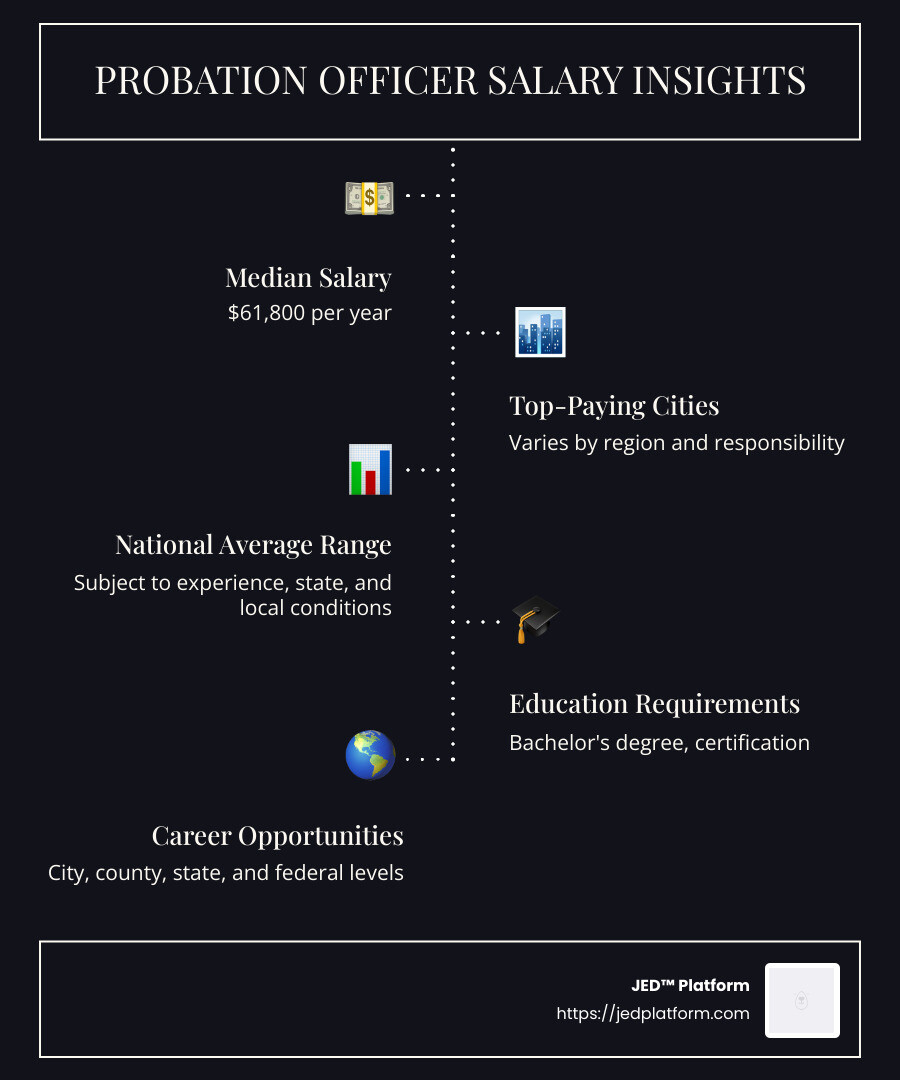
Probation officer salary is a crucial factor when considering a career in this field. Here’s a quick overview:
- Median Salary: $61,800 per year
- Top-Paying Cities: Vary by region and responsibility
- National Average Range: Subject to experience, state, and local conditions
A probation officer plays a key role in the criminal justice system, working to balance public safety while supporting offenders as they reintegrate into society. This balance is achieved through guidance, monitoring, and the provision of essential resources. With opportunities available at city, county, state, and federal levels, the field offers numerous paths, each with its own unique set of challenges and rewards.
Education is a cornerstone of a career as a probation officer. Aspiring candidates typically need a bachelor’s degree in areas like criminal justice, social work, or psychology. Furthermore, certification and experience may be required, especially for higher-level positions or federal roles. Certification often involves passing exams and meeting specific training conditions before full qualification.
Probation officer salary vocabulary:
– how to become a probation officer career and salary information
– what is the average salary for a juvenile probation officer
– average salary for oklahoma probation officer
Understanding Probation Officer Roles
Probation officers are vital in helping offenders turn their lives around. They supervise people on probation and parolees, ensuring they follow court-ordered conditions. This role is a mix of law enforcement and social work, making it both challenging and rewarding.
Supervising Offenders and Parolees
Probation officers keep a close eye on offenders who serve their sentences outside of prison. They check that these individuals follow the rules set by the court, like attending counseling sessions or staying away from drugs. Parolees, who have been released from prison early, also fall under their supervision. Officers ensure parolees reintegrate safely into the community and do not reoffend.
Linking to Social Services
A big part of a probation officer’s job is connecting offenders with social services. This includes finding counseling, education, jobs, and housing, all crucial for rehabilitation. By providing these resources, officers help offenders build better lives and reduce the chances of them committing new crimes.

Balancing Safety and Support
Probation officers walk a fine line between enforcing rules and offering support. They write reports for judges to help decide appropriate sentences and testify in hearings. They also investigate any violations of court orders, ensuring public safety is maintained.
In this role, communication skills are key. Officers interact with a wide range of people, from offenders to judges and social service providers. They need to be prepared for the potential hazards that come with working closely with a criminal population.
Probation officers work at various levels, from city to federal. Each level offers different challenges and experiences, but the goal remains the same: to support offenders while keeping the community safe.
Probation Officer Salary Overview
Probation officers play a crucial role in the justice system, and their compensation reflects the importance of their work.
Median Salary
Across the United States, the median annual salary for probation officers is about $61,800. This figure offers a general idea of what you might expect to earn, but actual salaries can vary based on several factors.
Salary by State
Probation officer salaries differ significantly from state to state. Factors like cost of living, state budgets, and demand for probation services can influence these differences. For instance, states with higher living costs often offer higher salaries to attract qualified professionals.
Top-Paying Cities
Certain cities and metropolitan areas are known for offering top-tier salaries for probation officers. These areas often have higher living expenses but also provide opportunities for higher earnings. While the research does not specify exact cities, it’s common for large metropolitan areas and cities with high demand for probation services to offer competitive pay.
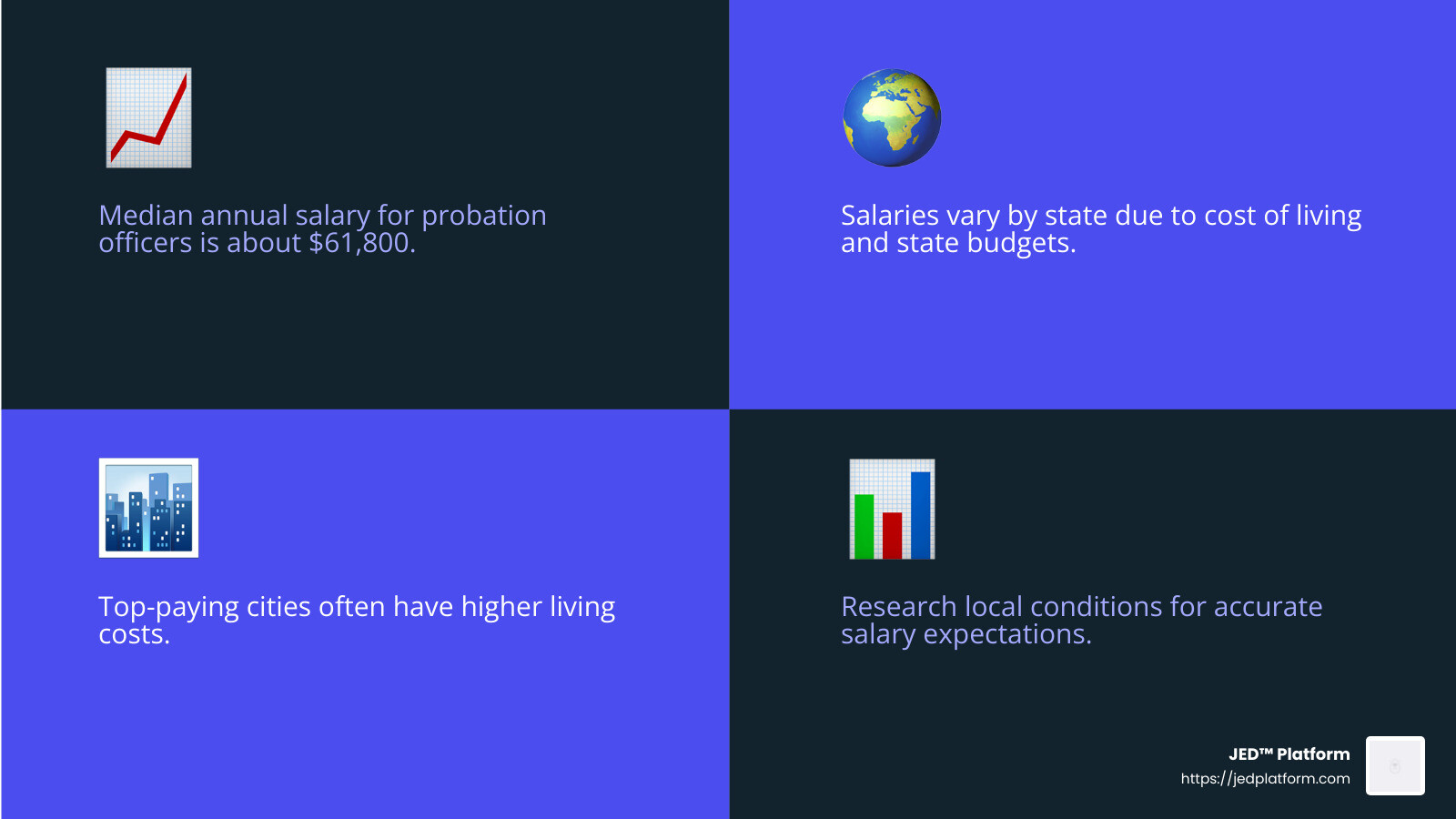
In summary, while the median salary provides a baseline, your actual earnings as a probation officer will depend on your location, experience, and the specific demands of your job. This variability highlights the importance of researching local conditions when considering a career in this field.
How to Become a Probation Officer
Becoming a probation officer is a rewarding career path that requires a combination of education, certification, and work experience. Here’s a step-by-step guide to help you understand what it takes to join this field.
Bachelor’s Degree
The first step to becoming a probation officer is earning a bachelor’s degree. Most positions require a degree in criminal justice, social work, psychology, or a related field. This education provides a strong foundation in understanding human behavior, the legal system, and rehabilitation processes.
Certification
Certification requirements for probation officers can vary by state. Some states mandate that probation officers pass a certification test during or after their training. This ensures that officers are well-prepared for the responsibilities they will face. It’s essential to check the specific requirements in your state, as these can impact your eligibility for employment.
Work Experience
While a bachelor’s degree is essential, having relevant work experience can significantly improve your career prospects. Federal probation officers, for example, must have at least two years of work experience in a related field. Jobs that qualify as related work experience include positions as a correctional case manager, juvenile court counselor, or roles in law enforcement with arrest powers.
Gaining experience in these areas not only makes you a more competitive candidate but also helps you develop the skills needed to effectively supervise and support offenders. It’s worth noting that your application can be strengthened by clearly listing all relevant experience with precise start and end dates.
Additional Requirements
To qualify as a probation officer, you must also meet a few basic criteria:
- Be a U.S. citizen
- Be over 20 years old
- Have no felony convictions
Additionally, you’ll need to pass several competitive exams, including written, oral, psychological, and physical tests. These exams ensure that you’re mentally and physically prepared for the challenges of the job.
Starting on a career as a probation officer requires dedication and preparation. By fulfilling the educational, certification, and experience requirements, you’ll be well on your way to making a significant impact in the criminal justice system.
Pros and Cons of Being a Probation Officer
Working as a probation officer has its ups and downs. Let’s break down some key aspects of the job.
Higher Pay
One of the pros is the potential for a good salary. Probation officers often earn more than correctional officers. The median annual salary is around $61,800, but this can vary by state and city. In some top-paying areas, salaries can be even higher. This makes it an attractive option for those looking to make a decent living.
Flexible Locations
Another advantage is the flexibility in locations. Probation officers can work at the city, county, state, or federal level. This means you can find job opportunities in various places across the U.S. Whether you prefer a busy city or a quieter town, there’s likely a position that fits your lifestyle.
Risky Situations
However, the job isn’t without its challenges. One significant con is the risk involved. Officers work closely with offenders, which can sometimes be dangerous. They often carry concealed weapons and pepper spray for protection. It’s crucial to be aware of these risks and consider if you’re comfortable with them.
In summary, being a probation officer offers a blend of benefits like competitive pay and job flexibility, but it also requires handling risky situations. This balance is something to consider if you’re thinking about pursuing this career path.
Frequently Asked Questions about Probation Officer Salary
What is the highest a probation officer can get paid?
Probation officer salaries can vary widely depending on location, experience, and the level of government they work for. While the median annual salary is around $61,800, top earners in certain cities and states can make significantly more. In some high-paying metropolitan areas, salaries can exceed $90,000 annually. The exact salary range can depend on factors like specialization within the field and years of experience.
Are probation officers considered law enforcement?
Yes, probation officers are considered part of the law enforcement community. They play a crucial role in community safety by supervising offenders who are serving their sentences outside of prison. While they don’t typically wear uniforms, they are often issued a badge and may carry weapons for protection. Their job is to ensure that offenders comply with the terms of their probation, which helps maintain public safety.
What are the educational requirements for probation officers?
To become a probation officer, a bachelor’s degree is typically required. Most officers have degrees in fields such as criminal justice, social work, or psychology. This education provides them with a broad understanding of the criminal justice system and the skills needed to work with a diverse population. Some states may also require additional certification or training, especially for federal positions, which might also demand prior work experience.
Conclusion
At JED™ Platform, we understand the critical role that probation officers play in maintaining community safety. Our pretrial software is designed to support these officers by providing accurate and fair risk assessments. This helps in making informed decisions about offenders who are awaiting trial, ensuring they get the necessary support while keeping communities safe.
Our approach focuses on offering pretrial diversion programs that not only assist individuals in navigating the justice system but also aim to reduce recidivism. By providing comprehensive monitoring services, we ensure that offenders adhere to their court-ordered conditions, which is essential for their successful reintegration into society.
In a field where every decision can impact public safety, having reliable tools and support is crucial. JED™ Platform is committed to empowering probation officers with the resources they need to perform their duties effectively, making a positive difference in the criminal justice system.