

From Arrest to Opportunity: How Diversion Programs Work
Diversion Programs for Offenders: Top 5 Proven Benefits

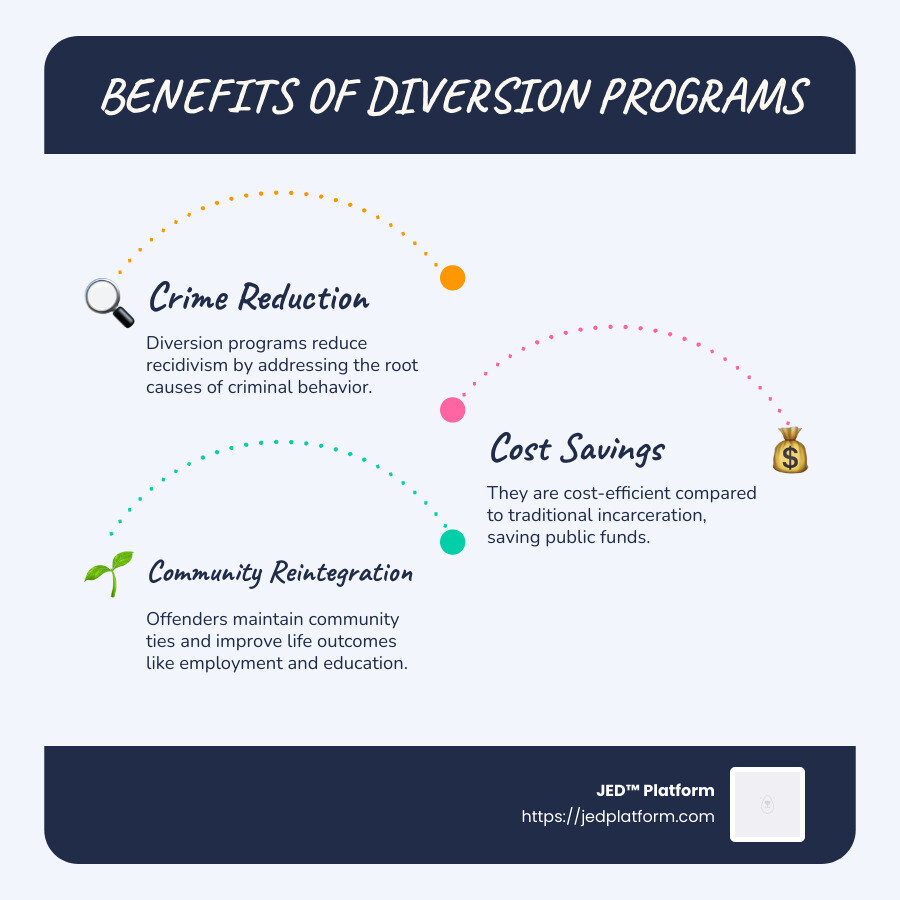
Diversion programs for offenders are becoming vital alternatives to traditional incarceration methods, offering new paths to justice and community safety. These programs are designed to tackle the root causes of criminal behavior, helping offenders reintegrate into their communities without the need for jail time. Here’s a quick look at why these programs matter:
- Purpose: Redirect offenders away from jail towards meaningful rehabilitation.
- Benefits: Reduce future crime, save public money, and support community ties.
- Elements: Focus on solving issues like unemployment and mental health.
For those interested in community safety and reducing incarceration, diversion programs provide innovative solutions. Instead of expanding prison populations, they minimize an individual’s contact with the criminal legal system, keeping them connected with their communities. Research shows they’re not only effective in lowering recidivism but also in improving life outcomes, such as employment and education.
Such programs demonstrate a pragmatic approach to public safety, ensuring that individuals are more than just their offenses. By investing in these alternatives, jurisdictions can create safer and more cohesive communities, paving the way for a stronger and more equitable justice system.
Know your diversion programs for offenders terms:
– alternatives to pretrial detention
– pretrial diversion programs
Understanding Diversion Programs
Diversion programs for offenders are like exit ramps off the highway of the criminal legal system. Instead of heading straight to jail, individuals are redirected toward programs that address the underlying problems causing their criminal behavior.
These programs focus on providing community-based services that tackle issues such as unemployment, lack of education, and mental health challenges. By doing so, they not only help the individual but also improve community safety.
What Makes Diversion Programs Effective?
-
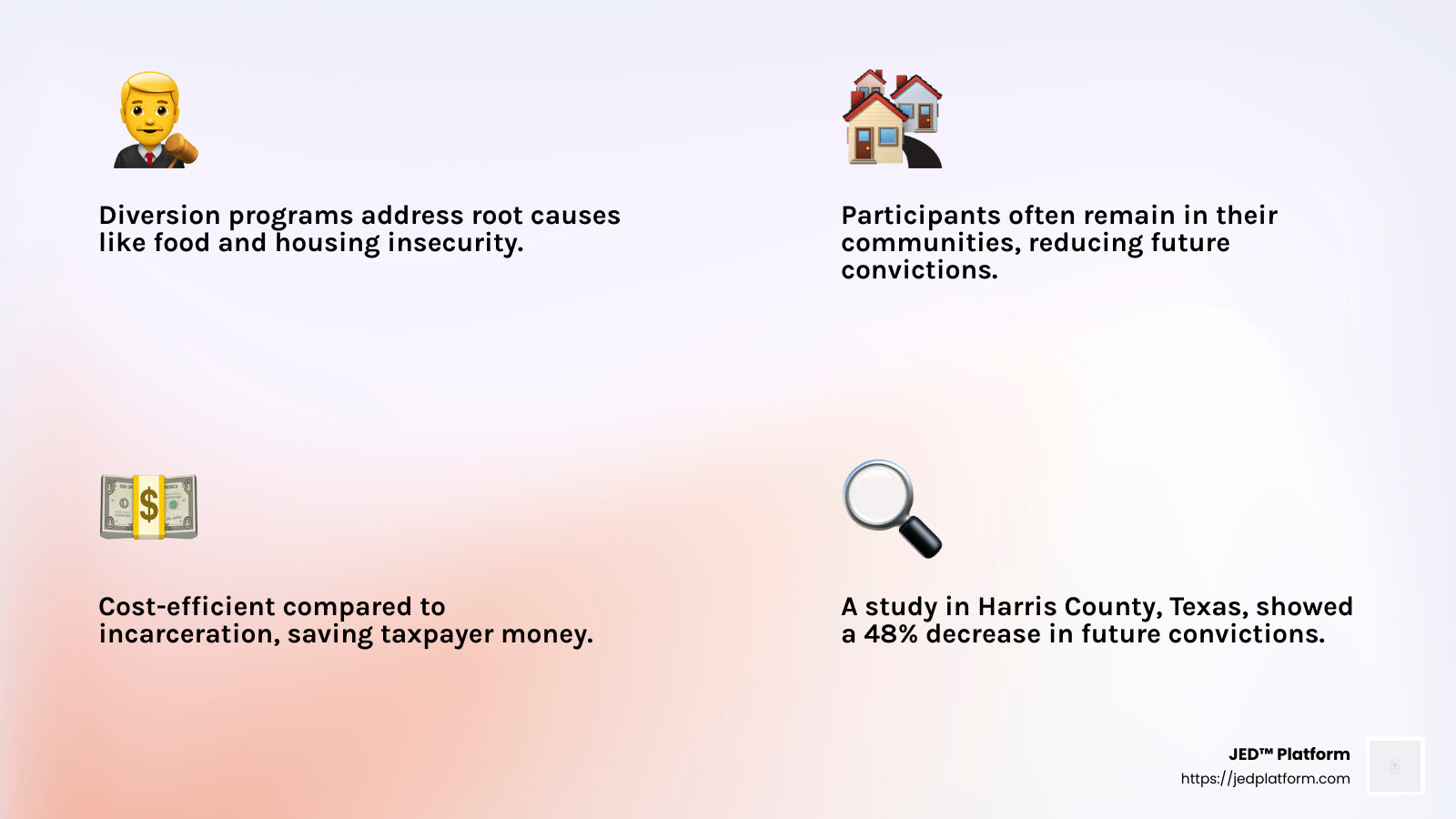
Addressing Root Causes: Many offenses stem from unmet needs such as food and housing insecurity or mental health issues. Diversion programs aim to resolve these problems, reducing the chances of reoffending.
-
Community Integration: Participants often remain in their communities, maintaining important social ties and responsibilities. This approach has proven effective in reducing future convictions and improving employment outcomes. For instance, a study in Harris County, Texas, showed a 48% decrease in future convictions for those involved in diversion programs.
-
Cost-Efficiency: Unlike incarceration, which is expensive and often ineffective, diversion programs save money by reducing the need for prison resources and lowering recidivism rates.
How Do Diversion Programs Work?
Diversion programs operate at various stages within the criminal justice process:
-
Early Diversion: This can occur before any formal charges are filed, steering individuals away from the justice system at the earliest point.
-
Pre-Plea Diversion: Takes place after charges are filed but before a plea is entered, offering offenders a chance to avoid a criminal record if they complete certain program requirements.
-
Post-Plea Diversion: Allows individuals to participate in programs after entering a plea, often as a condition of probation.
Each type of diversion program is custom to the needs of the participants and the community, ensuring a personalized approach to justice and rehabilitation.
In summary, diversion programs for offenders are not just about avoiding jail time. They are about creating opportunities for individuals to address the root causes of their behavior while staying connected to their communities. This approach not only helps the individual but also contributes to the overall safety and well-being of society.
Types of Diversion Programs
Diversion programs for offenders come in various forms, each designed to intervene at different stages of the criminal justice process. Understanding these types helps in grasping how these programs work to redirect individuals from traditional punitive measures to more rehabilitative approaches.
Informal and Formal Diversion
Informal diversion often involves directing an offender to community services or treatment programs without any formal legal proceedings. This can occur when law enforcement officers decide not to press charges or when prosecutors opt for an alternative resolution.
Formal diversion, on the other hand, is a structured program that typically requires a formal agreement between the offender and the legal system. These programs might involve specific conditions that must be met, such as attending counseling sessions or completing community service.
Early Diversion
Early diversion happens at the very start of the criminal justice process, often before any formal charges are filed. This proactive approach aims to prevent individuals from entering the system altogether. By addressing issues such as substance abuse or mental health challenges right away, early diversion can significantly reduce the burden on courts and correctional facilities.
Pre-Plea Diversion
Pre-plea diversion programs are available after charges are filed but before the offender enters a plea. This option allows offenders to participate in a program designed to address their specific needs. If they successfully complete the program, the charges may be dropped, avoiding a criminal record. This approach is particularly beneficial for first-time offenders or those charged with minor offenses.
Post-Plea Diversion
Post-plea diversion occurs after an offender has entered a plea but before sentencing. In this scenario, participation in a diversion program is often a condition of probation. Successful completion can lead to reduced sentences or other favorable outcomes. This type of diversion is useful for offenders who have already acknowledged their guilt but are seeking rehabilitation rather than punishment.
Each type of diversion program is custom to the individual’s circumstances and the community’s needs, emphasizing rehabilitation over incarceration. By offering these alternatives, the justice system can focus on reducing recidivism, promoting public safety, and fostering community integration.
Benefits of Diversion Programs for Offenders
Diversion programs for offenders offer numerous benefits, both for the individuals involved and the communities they live in. These programs focus on rehabilitation and support rather than punishment, which can lead to significant positive outcomes.
Recidivism Reduction
One of the most compelling benefits of diversion programs is their ability to reduce recidivism. By addressing the root causes of criminal behavior—like substance abuse, mental health issues, or lack of education—these programs help offenders develop skills and strategies to avoid future legal trouble. According to research, offenders who participate in diversion programs are less likely to reoffend compared to those who go through the traditional court system. This reduction in repeat offenses not only benefits the individuals but also improves community safety.
Cost-Efficiency
Diversion programs are also cost-effective. Traditional court proceedings and incarceration are expensive, both for the state and the individual. Diversion programs, which often include services like counseling, education, and job training, are much less costly. They save taxpayer money and reduce the financial burden on the legal system. Instead of funding lengthy court cases and prison stays, resources can be allocated to community-based services that provide long-term benefits.
Community Integration
Keeping offenders connected to their communities is another key benefit. Diversion programs often take place in familiar environments, such as schools or community centers, allowing participants to maintain their support networks. This community integration is crucial for rehabilitation, as it helps offenders build positive relationships and find stability. Programs that include family counseling and parenting skill development can strengthen family bonds, providing a support system that encourages long-term success.
By focusing on these benefits, diversion programs for offenders not only help individuals avoid the negative consequences of a criminal record but also promote healthier, safer communities. These programs are an essential part of a more compassionate and effective justice system.
Diversion Programs for Offenders: A Closer Look
Diversion programs for offenders are not just about keeping people out of jail. They are about giving people a real chance to change their lives, especially for those who might need it the most—youth and individuals with mental health challenges.
Youth Access
For young people, getting into trouble with the law can have long-lasting effects. Diversion programs aim to catch them early and guide them back on track. Research shows that many youths in the justice system are there for minor offenses and could benefit more from community-based support than from being labeled as delinquents. By involving families and offering custom services, these programs provide a second chance without the stigma of a criminal record.
In fact, studies have shown that youth who participate in diversion programs are up to 2.44 times less likely to be rearrested compared to those who go through the traditional system. This approach not only helps the young individuals but also contributes to safer communities in the long run.
Mental Health Support
Many offenders struggle with mental health issues, which can be both a cause and a consequence of their behavior. Diversion programs prioritize mental health support, providing access to counseling and treatment instead of incarceration. This is crucial because untreated mental health issues can lead to repeated offenses.
A report highlights the importance of developmentally appropriate responses for young adults with mental health needs, suggesting that custom interventions can significantly improve their chances of successful reintegration into society. By addressing these needs, diversion programs help individuals regain stability and reduce the likelihood of future offenses.
Custom Interventions
No two individuals are the same, and neither are their circumstances. Diversion programs recognize this by offering custom interventions that address the unique needs of each participant. Whether it’s substance abuse treatment, vocational training, or educational support, these programs are designed to provide the tools necessary for a fresh start.
For example, Missouri’s specialized drug courts combine treatment with supervision to help individuals overcome addiction and reduce criminal behavior. These custom approaches ensure that offenders receive the specific support they need, increasing the likelihood of successful rehabilitation.
By focusing on youth access, mental health support, and custom interventions, diversion programs for offenders offer a holistic approach that benefits both individuals and their communities. These programs provide a pathway to opportunity, helping offenders rebuild their lives while promoting public safety.
Frequently Asked Questions about Diversion Programs for Offenders
What are the main types of diversion programs?
Diversion programs come in various forms, primarily categorized as informal and formal.
-
Informal diversion often occurs at the discretion of law enforcement or prosecutors. They might decide not to pursue charges if the offender agrees to participate in community service or counseling.
-
Formal diversion involves structured programs that typically require court approval. These programs can include conditions like attending educational classes, undergoing treatment, or participating in community service.
Early diversion refers to interventions that occur soon after an offense, ideally preventing deeper involvement with the justice system. This can be crucial for young offenders, as it provides a chance to address issues before they escalate.
Pre-plea diversion allows offenders to participate in a program without entering a plea. If they complete the program successfully, charges may be dropped. This is different from post-plea diversion, where an offender must first enter a plea before participating in the program.
What are the disadvantages of diversion programs?
While diversion programs offer many benefits, they also have some drawbacks. One of the main concerns is net widening. This occurs when individuals who might not have faced any legal consequences are placed into diversion programs, expanding the reach of the justice system unnecessarily.
Another issue is the eligibility criteria. Not all offenders qualify for these programs, and there can be disparities in who gets access. For example, research indicates that Black and other non-White youth are less likely to be offered diversion opportunities compared to their White counterparts. This inequity can lead to disproportionate representation in the formal justice system.
How do diversion programs benefit communities?
Diversion programs play a significant role in enhancing public safety. By addressing the root causes of criminal behavior—such as substance abuse or mental health issues—these programs help reduce recidivism. Participants are less likely to reoffend, which contributes to safer communities.
Additionally, diversion programs lead to reduced incarceration rates. By keeping individuals out of jail, communities save on the high costs associated with incarceration. This not only eases the burden on the justice system but also allows offenders to maintain community ties, employment, and family relationships.
In summary, while diversion programs for offenders have some challenges, their benefits to individuals and communities are substantial. By focusing on rehabilitation rather than punishment, these programs offer a more effective and humane approach to justice.
Conclusion
Diversion programs are changing the way we approach justice, and at JED™ Platform, we’re proud to be at the forefront of this change. Our focus is on providing pretrial diversion solutions that emphasize fairness and accuracy in risk assessments. By doing so, we help individuals avoid the negative impacts of incarceration while still ensuring public safety.
Our approach is simple yet effective. By offering fair risk assessments, we can determine who is best suited for these programs. This means fewer people in jail and more individuals getting the support they need to change their lives. Our pretrial software is designed to assist those awaiting trial, ensuring they receive the right level of monitoring and support.
The benefits of these programs are clear. They not only reduce recidivism but also save communities money by lowering incarceration rates. More importantly, they offer offenders a chance to integrate back into society successfully, maintaining their jobs, family ties, and community connections.
At JED™ Platform, we believe in justice that heals rather than punishes. By focusing on rehabilitation and community-based solutions, we’re paving the way for a safer, more equitable future.
For more information on how JED™ Platform can assist with diversion programs for offenders, visit our service page and find how we’re making a difference.