

The Hidden Benefits of a Probation Officer Career
Probation Officer Benefits: 5 Hidden Career Perks 2024

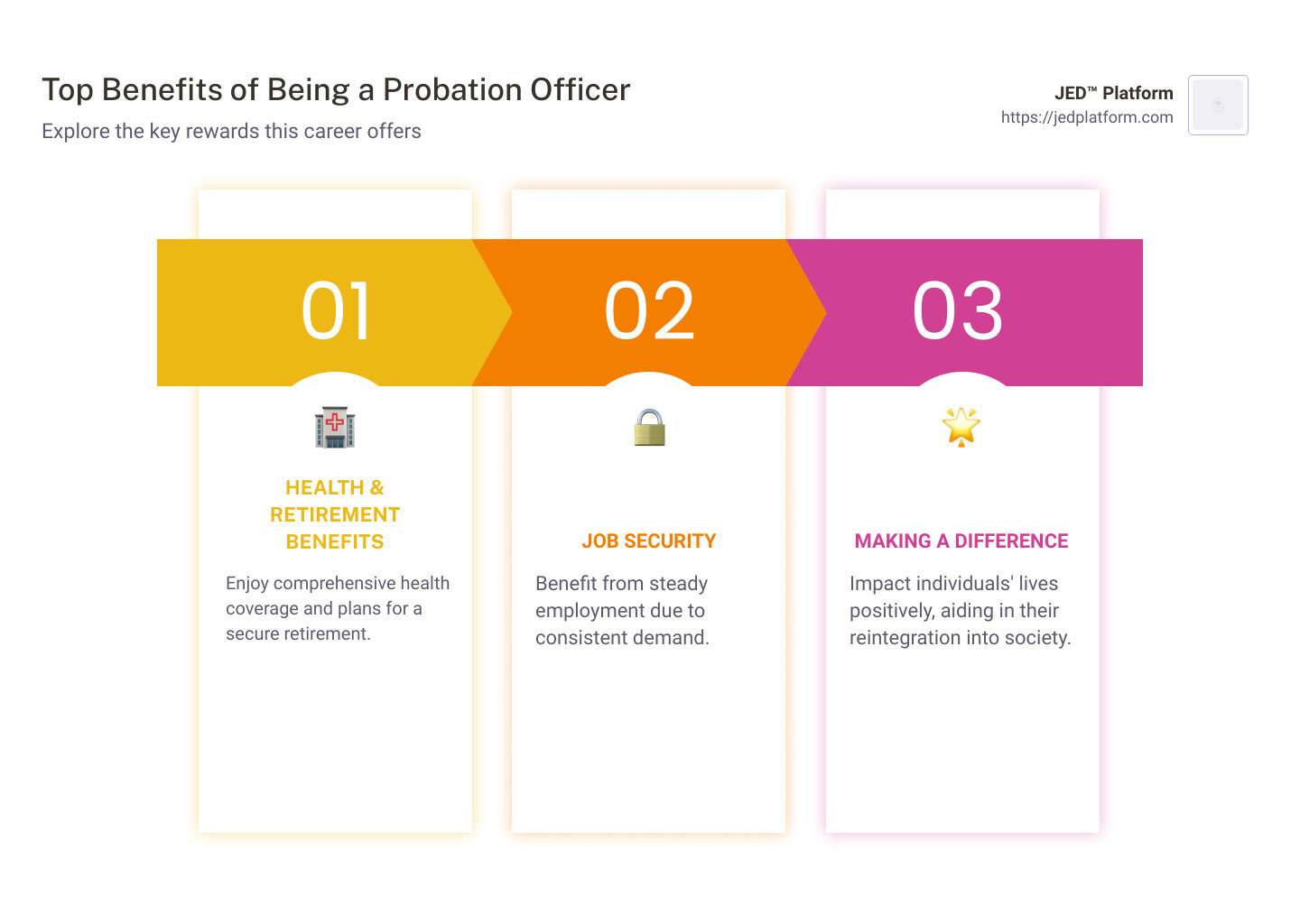
Probation officer benefits encompass a wide range of advantages that make this career a rewarding choice. As a probation officer, you are not only a crucial part of the justice system but also a key contributor to public safety and community well-being. Here’s a quick rundown:
- Health and retirement benefits: Comprehensive health coverage and plans for a secure retirement.
- Job security: Consistent demand for probation officers ensures steady employment.
- Making a difference: Directly impact individuals’ lives, helping them reintegrate into society.
Probation officers often find themselves at the forefront of both the legal system and social change. Working with individuals who have been convicted of crimes, they play an essential role in guiding these individuals towards rehabilitation and accountability. The positive societal impact is significant, as probation allows individuals to remain contributing members of their community, often leading to improved communal harmony and reduced incarceration costs.
Choosing a career as a probation officer means embracing a role where every day is different and offers the chance to make tangible improvements in people’s lives. Whether you’re interested in law, social work, or simply making a positive change, this role offers a meaningful career path with substantial personal and professional rewards.
Learn more about probation officer benefits:
– alabama probation officer pay raise
– federal probation officer pay scale
– highest paying states for probation officers
Key Responsibilities of a Probation Officer
Probation officers have a vital role in the justice system. Their work revolves around investigation, supervision, and court services.
Investigation
Probation officers start by investigating the backgrounds of individuals assigned to them. This involves gathering information from various sources, including court documents, police reports, and interviews with the individual and their family. Officers assess the risk the individual may pose to the community and identify any needs for rehabilitation.
They prepare detailed presentence reports to assist judges in making informed sentencing decisions. This report includes the officer’s findings and recommendations, helping the court understand the individual’s circumstances and potential for rehabilitation.
Supervision
Once the court places an individual on probation, the officer’s role shifts to supervision. This means regularly meeting with the individual to ensure compliance with the conditions of their probation. Officers may conduct home visits, monitor employment, and require regular drug testing.
Supervision is not just about enforcing rules; it’s about providing support. Officers help individuals access resources like counseling, education, and job training. This support is crucial in helping individuals reintegrate into society successfully.
Court Services
Probation officers also provide essential court services. They act as a bridge between the court and the community, ensuring that judicial decisions are implemented effectively. Officers attend court hearings, provide testimony, and update the court on an individual’s progress.
Their work ensures that individuals on probation are held accountable while supporting their journey towards rehabilitation. This dual focus on accountability and support helps reduce recidivism and improves community safety.
Probation officers, through their varied responsibilities, play a crucial role in the justice system. They are key players in promoting public safety and helping individuals rebuild their lives.
Probation Officer Benefits
Being a probation officer comes with several benefits that make it a rewarding career choice. Let’s explore some of these advantages.
Job Security
One of the most appealing aspects of a career as a probation officer is job security. As long as there are laws and people who break them, society will need probation officers. This demand provides a stable career path. According to the U.S. Bureau of Labor Statistics, probation officers and correctional treatment specialists earned a median salary of $60,250 in 2021, which is slightly above the national average. This competitive salary, combined with the constant need for skilled officers, means you don’t have to worry much about job cutbacks.
Minimal Education
To become a probation officer, you typically need a bachelor’s degree in fields like criminal justice, social work, sociology, or psychology. While a master’s degree can improve your prospects, it is not always necessary. This makes the career accessible to many, without the need for extensive and costly education. Many officers start their careers with a bachelor’s degree and gain experience through internships or related jobs in corrections or law enforcement.
Societal Contribution
Probation officers make a significant societal contribution. They help individuals integrate back into the community, reducing the chances of reoffending. By guiding and supervising those on probation, officers support public safety and aid in the rehabilitation process. Many officers find this aspect of the job rewarding. As one officer shared, “I enjoyed helping people and I loved the law. I wanted to make a difference with those coming out of prison who were seen as throwaways.” This sense of making a difference can be deeply satisfying.
Probation officers not only protect society but also provide a second chance to those who need it. This dual role of enforcement and support is crucial in fostering a safer and more compassionate community.
Challenges and Risks in the Role
While being a probation officer offers numerous benefits, the role also comes with its fair share of challenges and risks. Understanding these aspects is crucial for anyone considering this career path.
Dangerous Situations
Probation officers often find themselves in potentially dangerous situations. They work with individuals who have been convicted of crimes, ranging from misdemeanors to serious felonies. This means that there is always a risk of encountering hostile or unpredictable behavior. Officers must be vigilant and prepared to handle such scenarios, often relying on their training and instincts to de-escalate tense situations.
24-Hour On-Call
The job doesn’t always end at 5 PM. Probation officers may be required to be on-call 24 hours a day. This can mean responding to emergencies or violations of probation at any time, including nights and weekends. The unpredictability of the schedule can make it challenging to maintain a work-life balance. Officers need to be flexible and ready to act whenever duty calls.
Work-Related Stress
The combination of dangerous situations and irregular hours can lead to significant work-related stress. Managing high caseloads, meeting court deadlines, and ensuring compliance with probation terms can be overwhelming. Officers often juggle multiple tasks at once, requiring strong organizational skills.
Moreover, the emotional toll of working with individuals who may struggle with addiction, mental health issues, or a history of violence can be substantial. It’s essential for officers to have support systems in place, both professionally and personally, to manage this stress effectively.
Despite these challenges, many probation officers find the role rewarding. They have the opportunity to make a positive impact on their communities and help individuals turn their lives around. This sense of purpose can often outweigh the difficulties they face in their daily work.
Financial and Retirement Benefits
Probation officers enjoy a range of financial and retirement benefits that make the role attractive despite its challenges.
Salary Variations
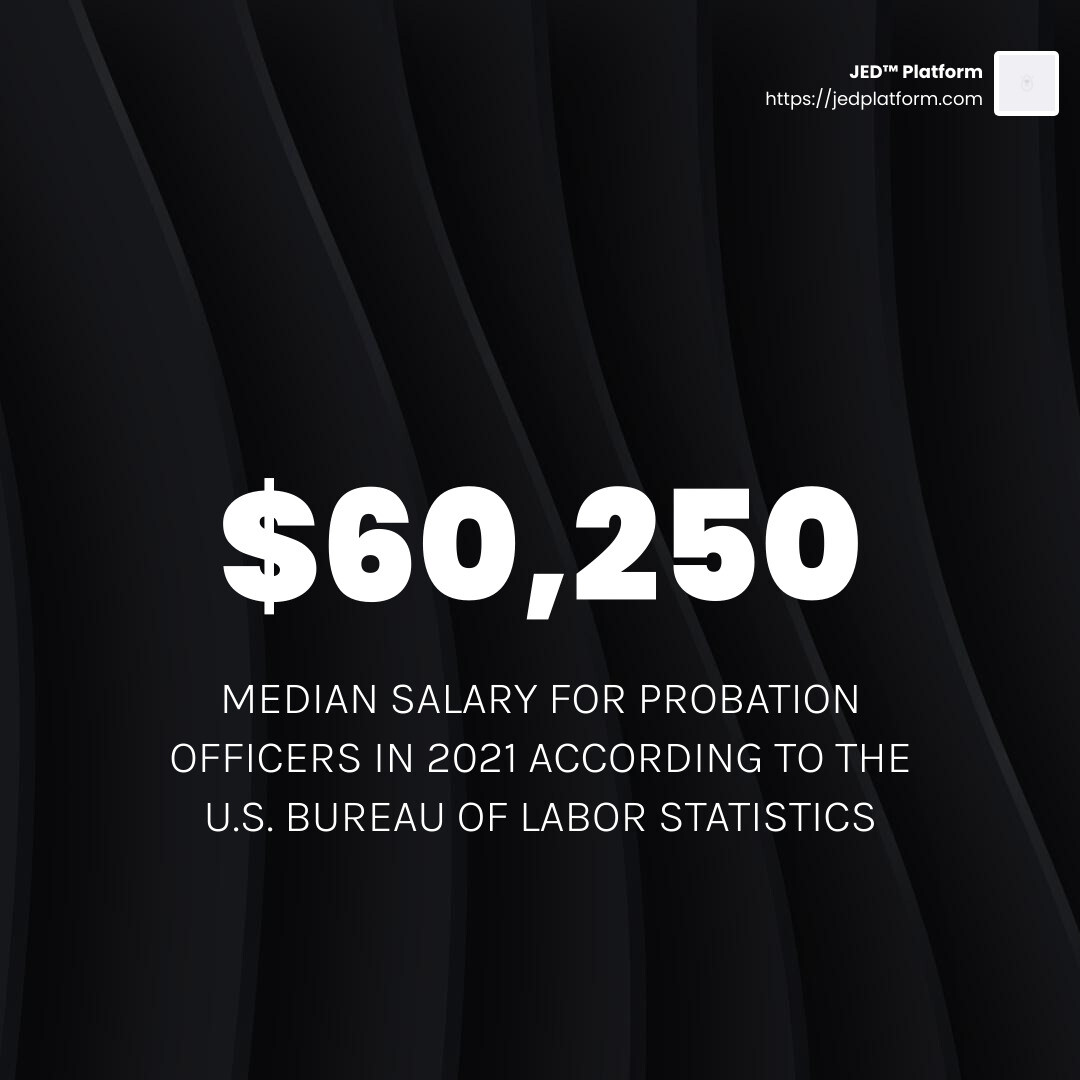
Probation officers’ salaries can vary widely based on location, experience, and the level of government they work for. According to the U.S. Bureau of Labor Statistics, the median salary for probation officers and correctional treatment specialists was $60,250 in 2021. This figure is just above the national average, reflecting the specialized skills and responsibilities the job entails.
Locality pay is another factor that influences salary. Officers working in urban areas or regions with a higher cost of living often earn more than those in rural settings. This adjustment helps to ensure that officers have a competitive wage that reflects their living expenses.
Federal Retirement Benefits
Probation officers serving in the federal system have access to robust retirement benefits. They are eligible for federal law enforcement retirement plans, which offer a comprehensive package including a pension.
One unique aspect of these plans is the mandatory retirement age of 57. This means officers must be appointed by their 37th birthday to qualify for full benefits. The early retirement age reflects the demanding nature of the role and ensures that officers can retire with dignity after a career of public service.
Locality Pay
Locality pay adjustments are an essential part of a probation officer’s compensation. These adjustments ensure that salaries are competitive and reflect the cost of living in different areas. The U.S. Probation and Pretrial Services system, for instance, sets pay at the local level, considering factors like experience, specific job skills, and education level.
This system ensures that officers are fairly compensated and can maintain a standard of living that aligns with their community’s economic conditions. For those considering a career as a probation officer, understanding these financial benefits is crucial. They provide a stable foundation that supports officers throughout their careers and into retirement.
Education and Training Requirements
Becoming a probation officer requires meeting specific educational and training standards. These requirements ensure that officers are well-prepared for the job’s complexities and responsibilities.
Undergraduate Degree
An undergraduate degree is the minimum educational requirement for a probation officer. This degree typically needs to be in a relevant field such as criminal justice, social work, or psychology. These fields provide a strong foundation in understanding human behavior, legal systems, and social services, all of which are crucial for effectively managing probation cases.
Background Checks
Prospective probation officers must undergo thorough background checks. This process is essential to ensure the integrity and reliability of individuals entering this sensitive role. Background checks typically include a review of criminal records, employment history, and personal references. In some cases, a credit check may also be conducted to assess financial responsibility.
Medical Examination
A pre-employment medical examination is another requirement for becoming a probation officer. This examination ensures that candidates are physically and mentally fit to handle the demands of the job. The role can be physically challenging, and officers may face stressful or potentially dangerous situations. Therefore, maintaining good health is crucial for both personal safety and effective job performance.
These requirements—education, background checks, and medical exams—are designed to prepare candidates for the vital work of supporting individuals in the criminal justice system. They help ensure that probation officers are equipped to make a positive impact in their communities while maintaining high professional standards.
Frequently Asked Questions about Probation Officer Benefits
What are the advantages and disadvantages of being a probation officer?
Advantages:
One of the most notable advantages of being a probation officer is job security. Due to the ongoing need for crime prevention and rehabilitation, probation officers are always in demand. As long as you perform your duties well, the risk of job cutbacks is minimal.
Disadvantages:
The job can also present challenges, such as dealing with dangerous situations. Probation officers often work with individuals who may pose a risk to themselves or others. This requires a high level of vigilance and the ability to manage potentially volatile interactions.
Where do probation officers make the most money?
Salary Variations:
Probation officer salaries can vary widely depending on location. According to the U.S. Bureau of Labor Statistics, the median salary for probation officers in 2021 was $60,250. However, this can fluctuate based on the cost of living and demand in different areas.
Highest Paying Cities:
Cities with a higher cost of living or greater demand for probation services often offer higher salaries. For example, urban areas with larger populations and higher crime rates may pay more to attract qualified candidates.
What are the benefits of probation?
Community Function:
Probation plays a crucial role in maintaining community function by allowing individuals to serve their sentences within their communities. This not only reduces the financial burden on the prison system but also helps offenders maintain ties with family and employment, which can aid in rehabilitation.
Accountability:
Probation ensures that individuals remain accountable for their actions while receiving guidance and support. Probation officers monitor compliance with court-ordered conditions, such as attending counseling or maintaining employment, which helps reduce the likelihood of reoffending.
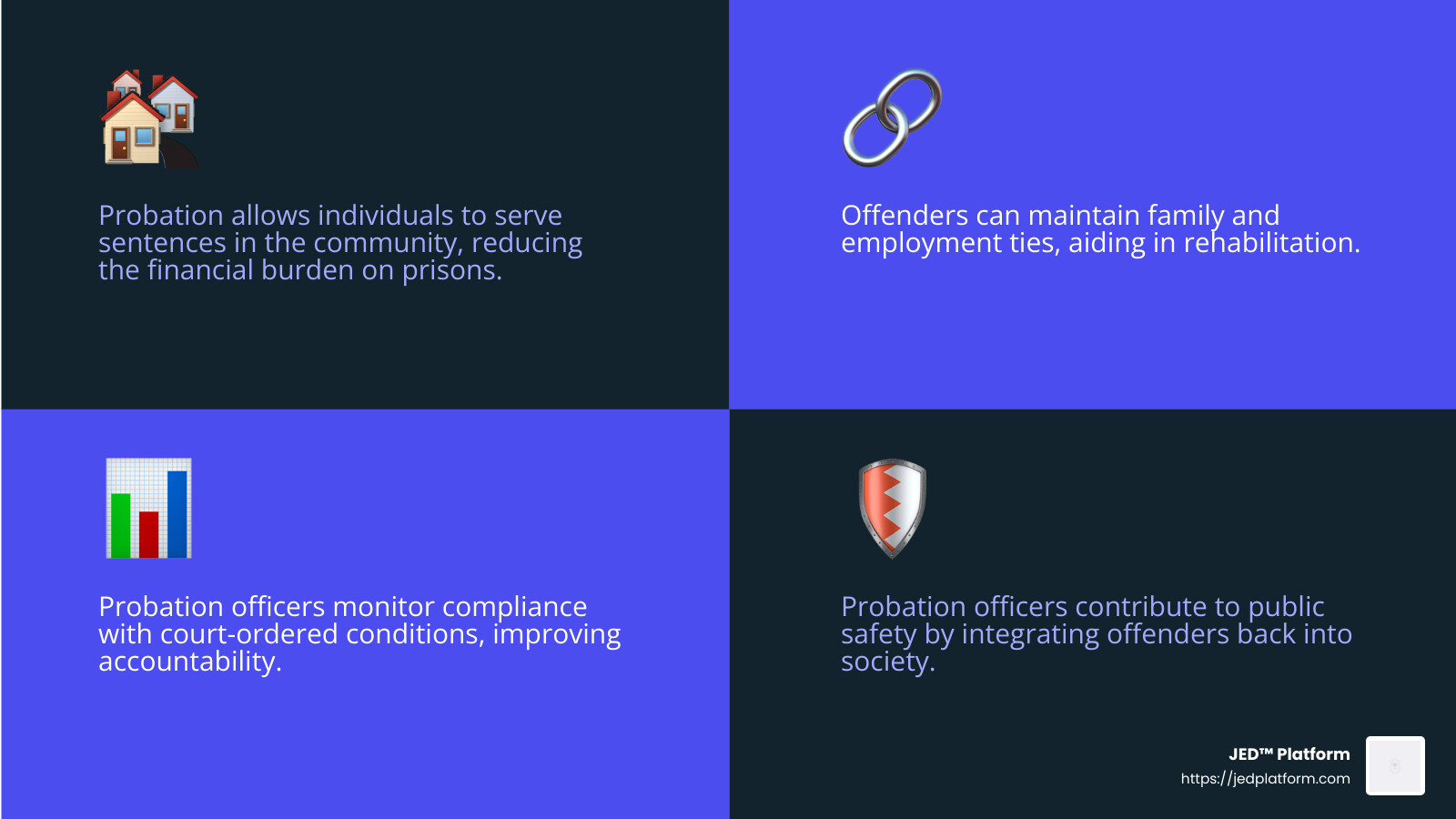
Probation officers contribute significantly to both individual lives and the broader community by helping integrate offenders back into society while ensuring public safety.
Conclusion
The role of a probation officer is more than just a job—it’s a chance to make a real impact on society. By guiding individuals through the rehabilitation process, probation officers help reduce recidivism and promote safer communities. Their work ensures that individuals who have made mistakes are given a second chance to contribute positively to society.
JED™ Platform plays a crucial role in supporting probation officers by offering pretrial diversion programs that provide fair risk assessments and monitoring services. These programs are vital in ensuring that individuals awaiting trial receive the guidance they need to stay on the right path, ultimately contributing to community safety.
In conclusion, a career as a probation officer is rewarding for those passionate about making a difference. It offers job security, personal fulfillment, and the opportunity to contribute to safer communities. For more information on probation officer pay and how it fits into your career goals, visit our Probation Officer Pay page.