

From Base Pay to Bonuses: Navigating Correction Officer Salaries
Correction Officer Salary: Top Insights for 2024 Success

Correction officer salary inquiries are quite common, and for good reason. Working as a correctional officer is not just about maintaining safety and order within correctional facilities; it’s also a viable career path with competitive pay and growth opportunities. Here’s a quick snapshot of what you can expect:
- Base Salary: Most correctional officers start with entry-level salaries that can vary significantly based on location and the level of government, such as federal or state facilities.
- Growing Salary: For those willing to invest in further education and training, the salary can grow significantly, even with advanced roles fetching six-figure sums.
- Veteran Benefits: In many regions, veterans receive additional salary bumps and benefits, making this profession even more lucrative for those who have served.
- Career Advancement: With additional training and specialization, officers can progress through ranks to administrative roles like warden, with salaries scaling accordingly.
The role of a correctional officer has transformed from a job commonly perceived as requiring minimal education to a promising career path emphasizing training and specialization. With states like California offering advanced programs and opportunities to specialize, correction officers can attain higher pay by climbing the career ladder.
Correction officer salary word guide:
– how much does a correctional officer make
– parole and probation officer salary
– probation officer salary by state
Understanding Correction Officer Salaries
Correction officer salaries can vary widely, but understanding the basics can help you steer this career path. Let’s break down the key components:
Base Pay
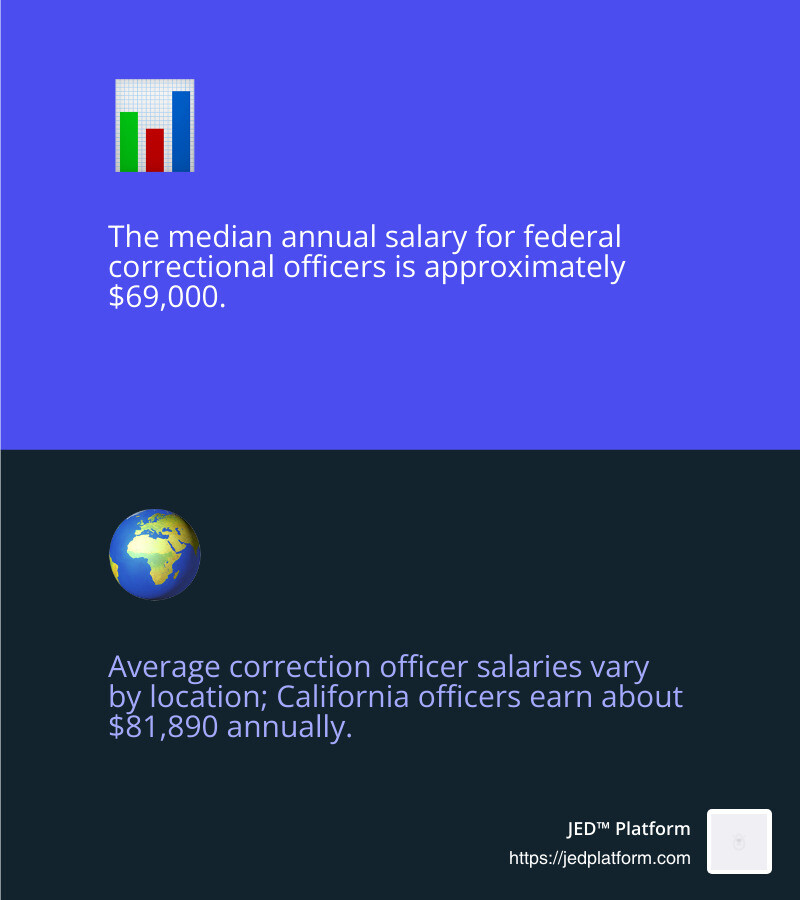
The base pay for correction officers is where many start their financial journey in this field. Typically, entry-level salaries are influenced by factors such as location and the type of facility—federal, state, or local. For instance, federal government facilities often offer higher starting salaries compared to state or local jails. According to the U.S. Bureau of Labor Statistics, the median annual salary for correctional officers in federal facilities is about $69,000.
Average Salary
On average, correction officers earn around $60,930 per year in Illinois, which is close to the national average. However, this figure can fluctuate based on several factors, including experience and education. For example, states like California report higher average salaries, with officers earning approximately $81,890 annually. This discrepancy highlights the importance of location in determining earning potential.
Salary Range
The salary range for correction officers can be quite broad. Entry-level positions may start around $47,920, but with experience and advancement, salaries can rise significantly. In some states, seasoned officers can earn up to $82,020. This range reflects the potential for growth within the profession, especially for those who pursue additional training and education. For instance, officers who advance to administrative roles or specialize in areas like juvenile corrections may see substantial salary increases.
Understanding these elements of correction officer salaries can help you make informed decisions about pursuing a career in this field. As you consider your options, investing in education and seeking opportunities for advancement can lead to higher earnings and a fulfilling career.
Factors Influencing Correction Officer Salaries
Several key factors can significantly impact a correction officer’s salary. Let’s explore the most influential ones:
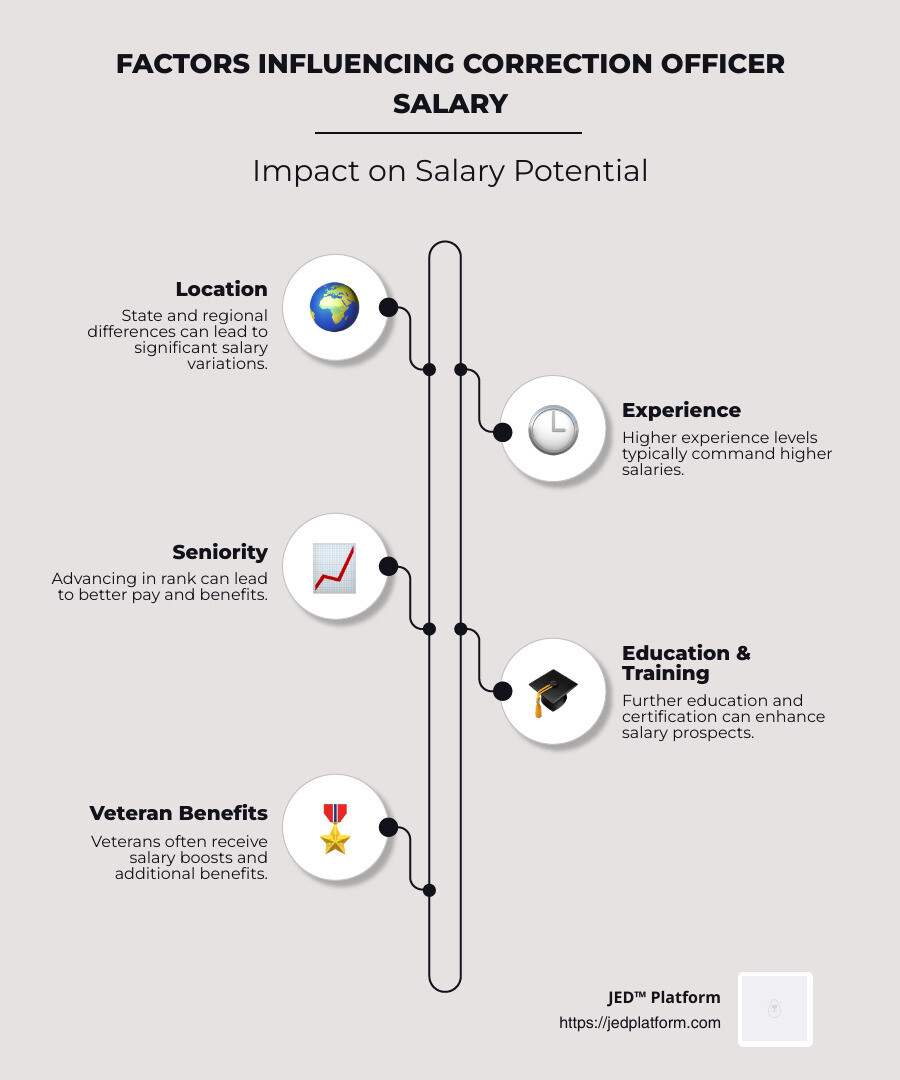
Location
Where you work matters. Salaries for correction officers can vary greatly depending on the state or metropolitan area. For instance, California often offers higher salaries due to the cost of living and demand for officers, with some officers earning around $81,890 annually. In contrast, states like Illinois and New York offer different pay scales. The median salary in Illinois is approximately $60,930, while New York correction officers, especially those in federal roles, may see higher wages.
Experience
Experience plays a crucial role in salary progression. Jessie Murray, a detention officer in Arkansas, notes that prior experience can lead to better pay. Officers with years of service can earn significantly more than those just starting. Some states even reward officers with bonuses for each year of service, acknowledging their dedication and expertise.
Seniority
Climbing the ranks can lead to substantial pay increases. As officers move from entry-level positions to roles like prison warden or superintendent, salaries can rise dramatically. For example, a superintendent in New York may earn over $130,000 annually. This kind of progression not only boosts salary but also opens doors to leadership opportunities within the correctional system.
Benefits
Beyond salary, benefits are a significant part of a correction officer’s compensation package. In Illinois, new officers receive health, vision, and dental insurance, along with a pension plan. Additionally, they are granted vacation days, sick leave, and personal business days. Such benefits can add considerable value to the overall compensation package, making it an attractive part of the job.
Understanding these factors can help you steer your career as a correction officer. Whether you’re considering where to work or planning your career path, these elements will influence your earning potential and job satisfaction.
Correction Officer Salary by State
When it comes to correction officer salaries, where you work can make a big difference. Let’s explore how salaries vary across different states, focusing on Illinois, California, and New York.
State Comparison
Salaries for correction officers differ widely across the United States. This is due to factors like cost of living, state budgets, and demand for correction officers. Here’s a quick snapshot of average salaries in some states:
-
California: Correction officers here earn the highest average salary, about $81,890 per year. This is largely due to the high cost of living and the state’s large prison system.
-
Illinois: Officers in Illinois earn an average of $60,930 annually. While this is lower than in California, it’s still competitive compared to many other states.
-
New York: In New York, salaries can vary significantly, especially between state and federal positions. On average, officers earn $64,640, but those in federal roles or with more experience can earn much more.
Illinois
In Illinois, the average salary for a correction officer is $60,930 per year. This puts Illinois right in the middle compared to other states. The salary range typically starts from $47,920 and can go up to $82,020 with increased experience and seniority. Illinois offers a balanced combination of salary and benefits, making it an attractive option for correction officers.
California
California leads the nation in correction officer salaries with an average of $81,890 annually. This high salary reflects the state’s higher cost of living and the extensive correctional facilities that require a large workforce. California also offers advanced training programs and opportunities for specialization, which can further increase earning potential.
New York
In New York, the average salary stands at $64,640. However, officers in federal positions or those with significant experience can earn higher salaries. For instance, a superintendent in New York might make over $130,000 a year. The state’s emphasis on federal roles and higher-ranking positions contributes to these varied salary opportunities.
Understanding these state-by-state differences can help you make informed decisions about your career as a correction officer. Whether you’re looking to start your career or move to a different state, knowing the salary landscape is crucial.
Correction Officer Salary Progression
Starting a career as a correction officer involves several stages, each affecting your salary. Let’s break down the progression from trainee to certified officer.
Trainee Salary
The journey begins as a Correctional Officer Trainee. In Illinois, for example, the starting salary is $53,820 per year. This initial stage involves a three-month appointment, during which trainees attend the Corrections Training Academy for six weeks. While in training, work attire is provided, and trainees gain essential skills for the role.
Probationary Period
After the training period, trainees are promoted to full Correctional Officers. At this point, the salary increases to $57,828 annually. However, this is just the start of the probationary period, which lasts four and a half months. During this time, officers continue to develop their skills and adapt to the demands of the job. Successfully completing this period is crucial for long-term career success.
Certification
Once the probationary period ends, correction officers become certified. Certification not only solidifies their position but also opens doors for further advancement. In states like California, officers can pursue specialized training in areas such as juvenile corrections or parole. These opportunities can lead to higher salaries and roles with more responsibility.
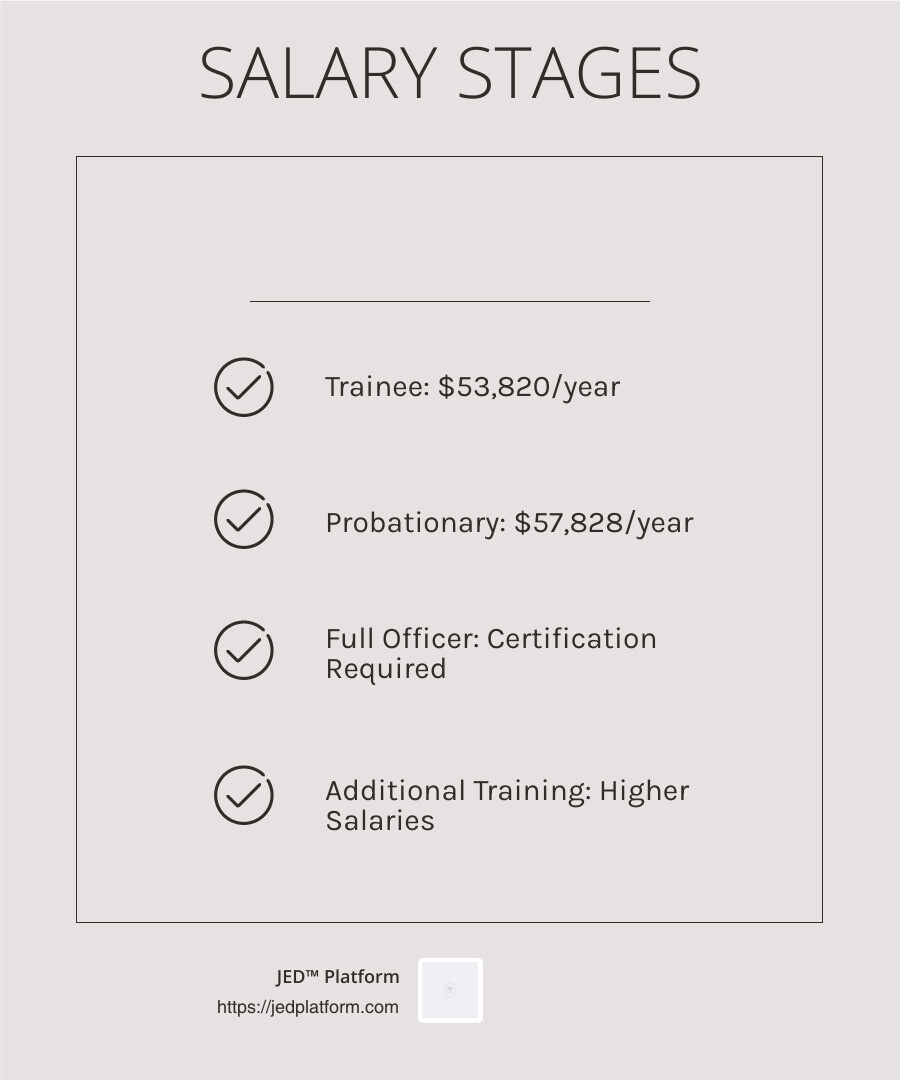
Understanding the salary progression from trainee to certified officer helps you plan your career path. Each stage comes with its own challenges and rewards, ultimately leading to a stable and rewarding career in corrections. As you gain experience and pursue additional training, your potential for increased earnings and career growth expands.
Frequently Asked Questions about Correction Officer Salaries
What is the starting salary for a correction officer?
In Illinois, the starting salary for a Correctional Officer Trainee is $53,820 per year. This is the entry-level pay for those beginning their journey in corrections. After completing the initial training period, trainees are promoted to full Correctional Officers, with a salary increase to $57,828 annually.
How does location affect correction officer salaries?
The location where you work significantly impacts your correction officer salary. For instance, salaries can vary widely between states. Federal facilities generally offer higher pay than state or local institutions. For example, federal government facilities offer a median annual salary of $69,000, while state government facilities offer around $60,630. On the other hand, local government positions might offer about $46,880. So, choosing where to work can make a big difference in your paycheck.
What benefits do correction officers receive?
Correction officers enjoy a range of benefits beyond their base salary. These often include comprehensive health, vision, and dental insurance. In Illinois, for example, life insurance is provided at 100% of the officer’s annual salary. Additionally, correction officers are typically enrolled in a pension plan, ensuring financial security in retirement.
Officers also receive vacation days, sick leave, and personal business days. New employees in Illinois are entitled to ten vacation days, twelve sick days, and three personal business days per year. These benefits contribute significantly to the overall compensation package and job satisfaction.
Understanding these aspects of correction officer salaries can help you make informed decisions about starting and advancing your career in corrections.
Conclusion
Starting on a career as a correction officer offers a variety of opportunities and insights into the justice system. The role is not just about maintaining order; it’s about making a positive impact on the lives of inmates and the community. As we’ve explored, factors like location, experience, and education significantly influence a correction officer’s salary, creating a dynamic career path with room for growth.
At JED™ Platform, we understand the complexities of the criminal justice system and the pivotal role correction officers play. Our pretrial diversion programs are designed to support fair assessments and monitoring, ensuring that individuals awaiting trial receive the necessary support. This aligns with the broader goals of correction officers who work tirelessly to facilitate rehabilitation and reduce recidivism.
Salary insights show that while the starting pay can be modest, there are numerous avenues for advancement. For instance, moving from a Correctional Officer Trainee to a certified officer brings a notable salary increase. Moreover, specialized training and education can lead to higher-paying roles within the federal system or administrative positions.
A career in corrections is both challenging and rewarding. It offers stability, benefits, and the chance to contribute meaningfully to society. If you’re considering this path, your journey can be as unique as you make it, with countless opportunities for personal and professional growth.
For more insights into careers in corrections and how JED™ Platform can support your journey, visit our website.