

A Guide to Federal Probation Officer Training Programs
Federal Probation Officer Training: Top Programs in 2024
The Importance of Federal Probation Officer Training

Federal probation officer training is crucial for ensuring the safety and proper rehabilitation of individuals under federal supervision. These officers play a vital role in the criminal justice system by managing and guiding both offenders and defendants through different stages in the judicial process.
For a quick overview, federal probation officer training involves:
- Initial orientation to understand the Federal Judicial System and law enforcement agencies
- On-the-job training focusing on task analysis, probationer supervision, and report writing
- Specialized training through programs offered at the Federal Law Enforcement Training Center and the Federal Judicial Center
Federal probation officers are essential in providing community safety and aiding the courts in the fair administration of justice. Their duties include investigating backgrounds, preparing reports, and supervising offenders and defendants.
Simple guide to federal probation officer training:
- probation and parole officer training
- sex offender training for probation officers
- juvenile probation officer training and certification
Federal probation officers are key players in the U.S. criminal justice system. They work with individuals who have been charged with or convicted of federal crimes. These officers ensure that justice is served fairly while also protecting the community.
Roles and Responsibilities
Federal probation officers have several important tasks:
- Pretrial Services Officers: They work with defendants before their trial. Their job is to make sure these individuals do not commit new crimes and show up for court.
- Probation Officers: They supervise offenders after they have been convicted and, in some cases, after they are released from prison. They help these individuals reintegrate into society while ensuring they follow the law.
- Officer Assistants: These professionals support probation and pretrial services officers. They help with investigations, report writing, and supervising low-risk offenders.
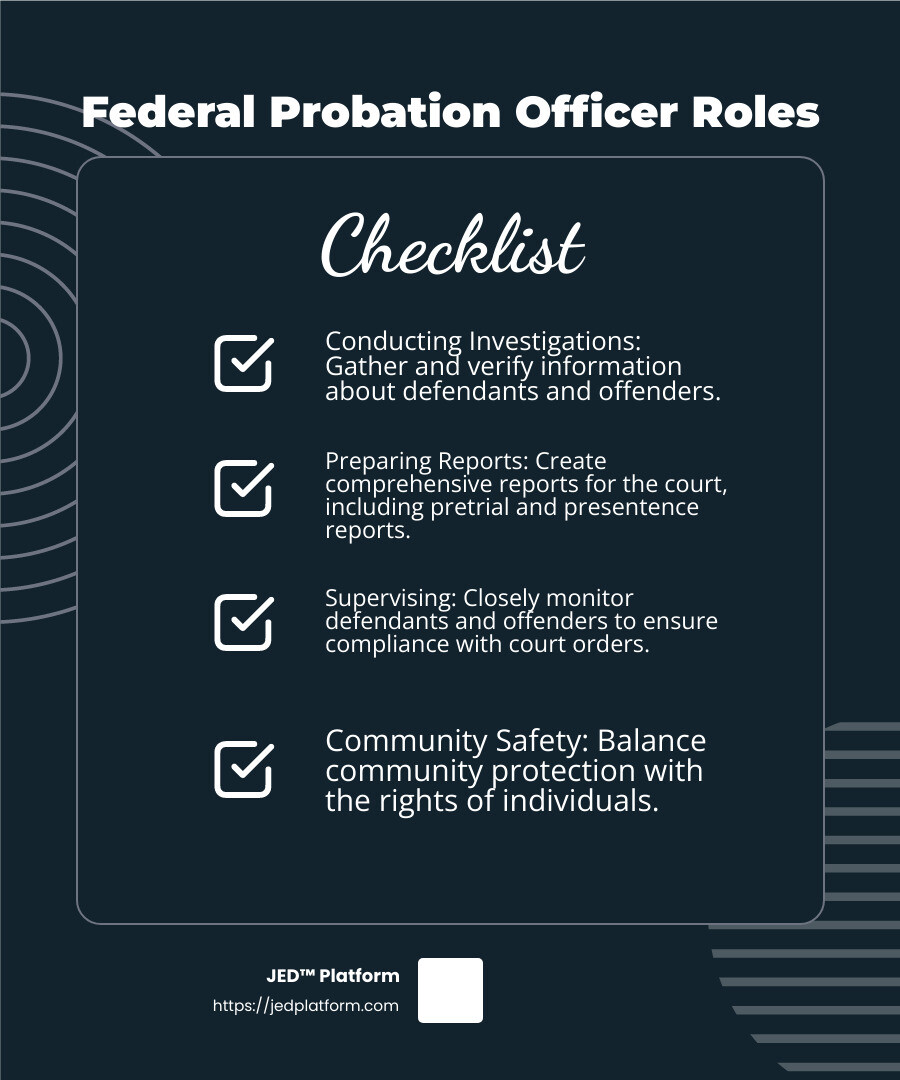
Key Duties
-
Conducting Investigations: Officers gather and verify information about defendants and offenders. They check criminal histories, interview family members, and review records like school or employment histories.
-
Preparing Reports for the Court: Officers use their investigations to prepare reports that help judges make decisions. For instance:
- The pretrial services report recommends whether a defendant should be released before trial and under what conditions.
- The presentence report helps the judge decide on a fair sentence after a conviction.
-
Supervising Defendants and Offenders: Officers monitor individuals to ensure they comply with court orders. This can include regular check-ins, drug tests, and ensuring they attend required treatment programs.
Community Safety and Justice
Federal probation officers play a crucial role in balancing community safety with the rights of defendants and offenders. By thoroughly investigating backgrounds, preparing detailed reports, and closely supervising individuals, they help maintain order and fairness in the justice system.
These officers are essential for the smooth functioning of the courts and the safety of our communities. Their work helps reduce recidivism and supports the successful reintegration of offenders into society.
Requirements to Become a Federal Probation Officer
Becoming a federal probation officer involves meeting several key requirements. These include educational qualifications, passing background checks, and undergoing various screenings.
Education
To start, aspiring federal probation officers need a bachelor’s degree. While there is some flexibility in the field of study, degrees in criminal justice, psychology, or social sciences are often preferred. These programs provide foundational knowledge about the criminal justice system, human behavior, and effective communication skills.
Background Check
Before hiring, candidates must pass a thorough background check. This process ensures that the applicant has no criminal history or other factors that could compromise their integrity or ability to perform the job. This check includes reviewing the candidate’s criminal records, financial history, and sometimes even interviewing people who know the applicant.
Psychological Screening
A crucial part of the hiring process is the psychological screening. This assessment evaluates the mental and emotional stability of the candidate. Given the stressful nature of the job, ensure that future officers can handle high-pressure situations and maintain their composure.
Drug Screening
Lastly, candidates must pass a drug screening. This test is part of a zero-tolerance policy for illegal drug use. Even after being hired, officers are subject to random drug tests to ensure ongoing compliance.
Meeting these requirements is the first step in becoming a federal probation officer. It ensures that only qualified, reliable, and stable individuals are entrusted with the significant responsibilities of this role.
Federal Probation Officer Training Programs
On-the-Job Training
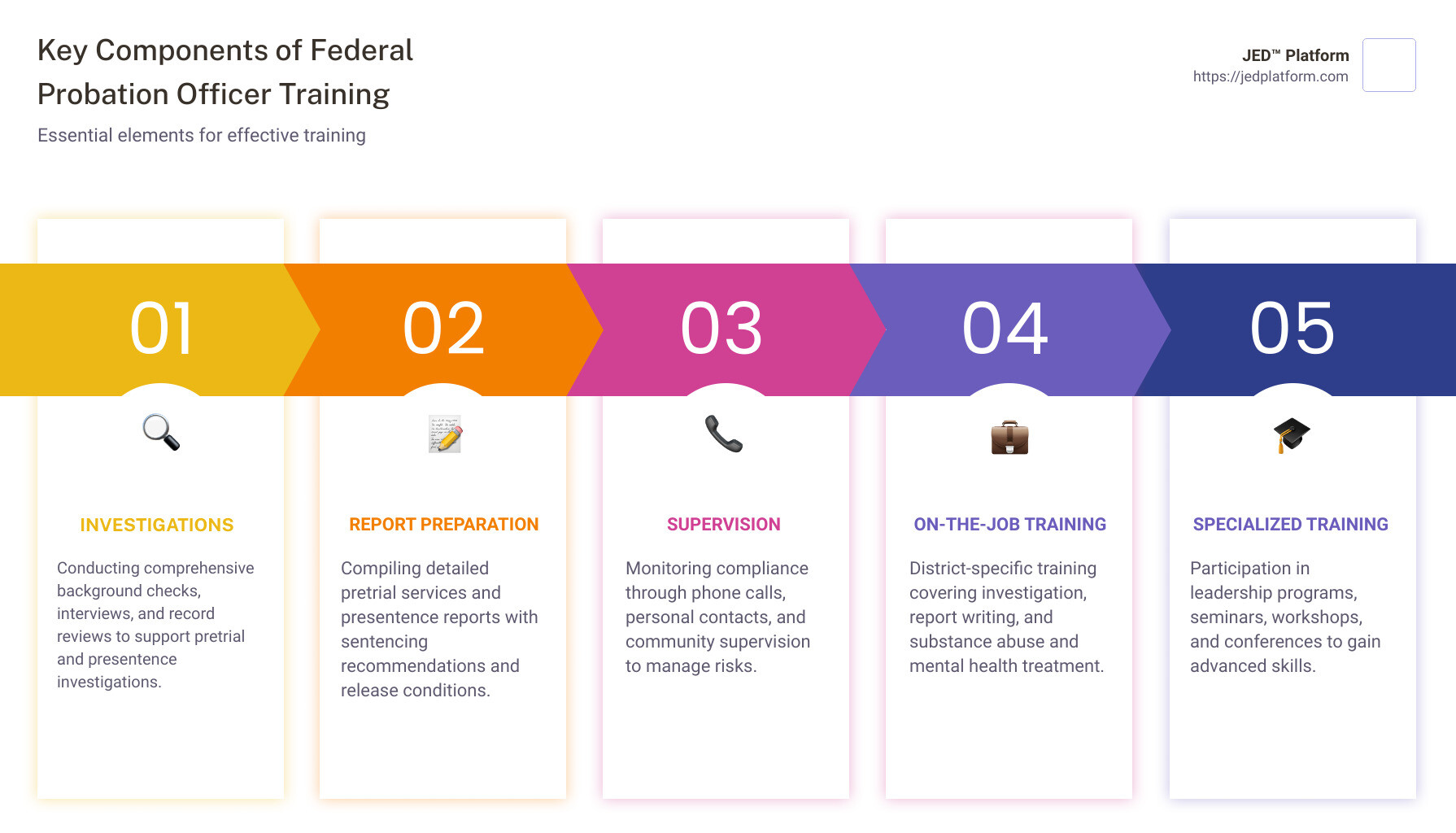
Once hired, federal probation officers undergo extensive on-the-job training. This training is custom to the specific court district where the officer will work. Key areas of focus include:
-
Investigation: Officers learn how to conduct thorough investigations, including background checks and interviews.
-
Report Writing: Officers are trained to prepare detailed reports for the court, such as pretrial services reports and presentence reports.
-
Substance Abuse and Mental Health Treatment: Officers receive instruction on identifying and addressing issues related to substance abuse and mental health, crucial for managing individuals under supervision.
-
Firearms and Safety: Safety is paramount. Officers are trained in the use of firearms and other safety protocols to ensure they can protect themselves and others.
Other areas of training may include CPR, diversity training, budgeting, and even retirement planning, depending on what the district’s chief deems necessary.
Specialized Training Programs
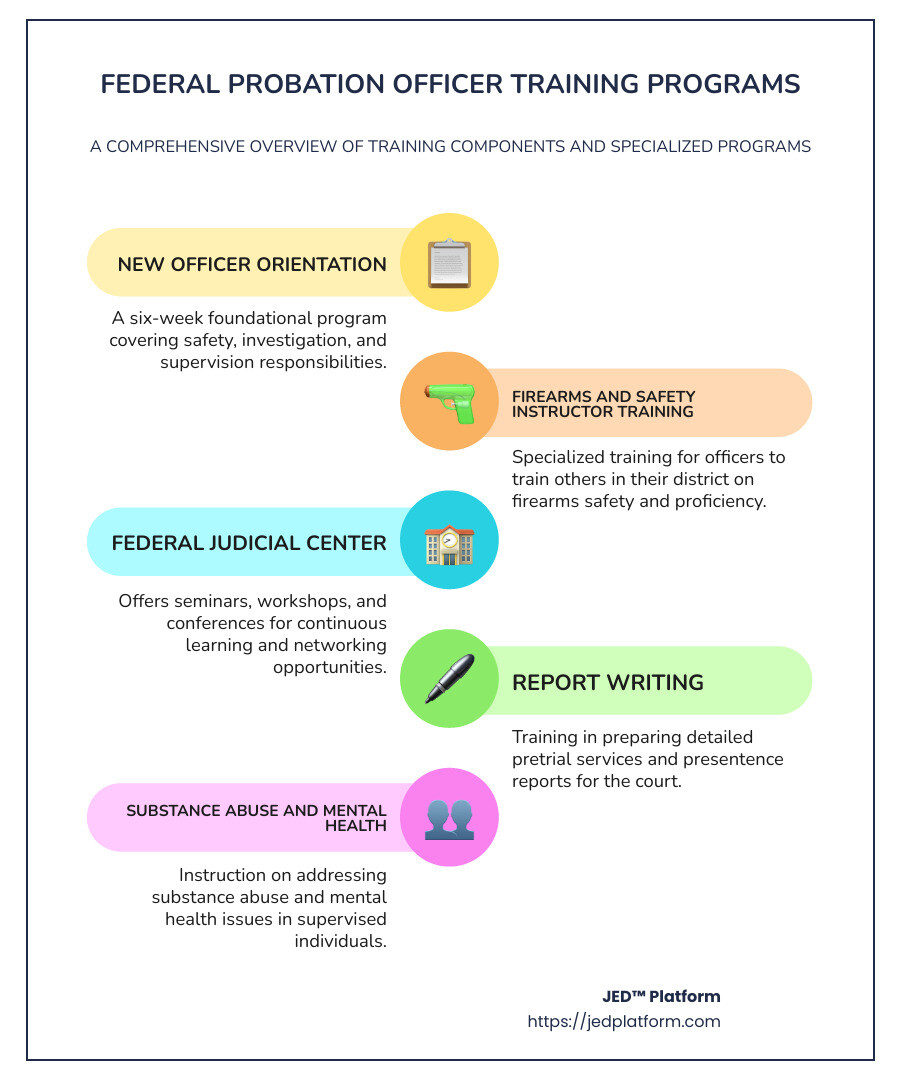
In addition to district-specific training, federal probation officers have access to specialized programs at the National Training Academy located at the Federal Law Enforcement Training Center (FLETC) in Charleston, South Carolina. Established in 2005, the Academy provides newly appointed officers with the skills needed to safely start their careers.
New Officer Orientation
The new officer orientation is a six-week program that covers all the basics. Officers learn how to safely perform investigation and supervision responsibilities. This foundational training ensures that officers are well-prepared for the demands of their roles.
Firearms and Safety Instructor Training
For those who will serve as firearms and safety instructors, specialized training is available. This program equips officers with the skills to train others in their district, ensuring that all personnel maintain high standards of safety and proficiency with firearms.
Federal Judicial Center Programs
The Federal Judicial Center offers a range of additional training opportunities. These include:
-
Seminars and Workshops: Covering various topics relevant to probation officers.
-
In-Person and Online Conferences: Providing opportunities for continuous learning and networking.
-
Leadership and New Supervisor Programs: Preparing officers for higher responsibilities and leadership roles.
By combining district-specific training with specialized programs, federal probation officers are well-equipped to handle the diverse challenges they will face in their careers.
Key Components of Federal Probation Officer Training
Conducting Investigations
Federal probation officers play a crucial role in investigating individuals under their supervision. This involves conducting background checks, interviews, and record reviews.
Pretrial Services Investigation: Before a trial, officers gather information about the defendant. This helps the court decide on release conditions. Officers review criminal history, interview the defendant, and contact family members or employers for additional insights.
Presentence Investigation: After a conviction, officers prepare a presentence report. This includes detailed information on the offender’s background, criminal history, and any mitigating circumstances. The report helps the court determine an appropriate sentence.
Preparing Reports for the Court
Report preparation is a critical part of a probation officer’s duties. Officers must present accurate and detailed information to the court.
Pretrial Services Report: This report provides a comprehensive overview of the defendant’s background and current situation. It includes recommendations on whether the defendant can be safely released before trial.
Presentence Report: This report is prepared after a conviction and before sentencing. It includes sentencing recommendations based on the offender’s history and the nature of the crime.
Sentencing Recommendations: Officers suggest appropriate sentences, considering the offense’s impact on the victim and the offender’s ability to pay fines or restitution.
Release Conditions: Officers recommend conditions for the offender’s release. These conditions are custom to the individual and may include drug testing, employment requirements, or location monitoring.
Supervising Defendants and Offenders
Supervision is a key responsibility of federal probation officers. They ensure that individuals comply with court-ordered conditions and help them reintegrate into the community.
Compliance Monitoring: Officers monitor compliance through phone calls, personal contacts, and home or job visits. They ensure that offenders follow the court’s conditions.
Community Supervision: Officers supervise offenders in the community to reduce the risk they pose to the public. Pretrial services officers handle defendants released before trial, while probation officers supervise those on probation, parole, or supervised release.
Risk Management: Officers manage risks by verifying employment, monitoring associates, and restricting travel. They take actions to ensure offenders obey the law and pose no threat to the community.
By mastering these key components, federal probation officers can effectively manage their responsibilities and contribute to the safety and well-being of the community.
Frequently Asked Questions about Federal Probation Officer Training
How long is US probation officer training?
Federal probation officer training typically lasts around 200 hours. This entry-level training ensures that new officers have the essential skills and knowledge to perform their duties effectively. The training is conducted at the Federal Law Enforcement Training Center in Charleston, South Carolina. It covers various aspects, from investigation techniques to firearms safety.
What is the minimum education requirement for most US probation officers?
To become a federal probation officer, you need at least a bachelor’s degree. Common fields of study include criminal justice, social science, and psychology. This educational background provides a solid foundation in understanding human behavior, legal systems, and investigative techniques.
What are the requirements to become a probation officer in NC?
In North Carolina, the requirements to become a probation officer include:
- U.S. citizenship
- A bachelor’s degree in a relevant field
- Psychological screening to ensure mental fitness
- Drug screening to ensure a drug-free lifestyle
- A background check to confirm a clean criminal record
Meeting these requirements helps ensure that candidates are well-prepared and trustworthy for the responsibilities of the role.
Conclusion
Federal probation officer training is crucial for ensuring that officers are well-prepared to handle their responsibilities. This training provides the skills needed to conduct investigations, prepare reports, and supervise defendants and offenders effectively. It also emphasizes the importance of safety, both for the officers and the community.
Training Programs: From the Federal Probation and Pretrial Services Training Academy to district-specific on-the-job training, officers receive comprehensive education. This includes everything from investigation techniques and report writing to specialized training in substance abuse and mental health treatment.
Importance of Training: Proper training ensures that officers can make fair risk assessments and provide effective monitoring services. This is vital for maintaining public safety and supporting the successful reintegration of offenders into the community.
JED™ Platform: Our platform is designed to support these training programs and the ongoing needs of probation officers. We offer tools for pretrial diversion programs, fair risk assessments, and comprehensive monitoring services. Our goal is to provide a robust support system that improves the effectiveness of probation officers.
For more information on how we can assist with probation officer training and support services, visit our JED™ Platform.
By investing in thorough and continuous training, we can help probation officers perform their duties with confidence and integrity, ultimately contributing to a safer and more just society.