

Parole Explained: Everything You Need to Know
Define Parole: Top 10 Essential Facts You Need to Know
Understanding Parole
Parole is the conditional release of a prisoner before their full sentence is completed. This term refers to a system where inmates can serve the remainder of their sentence outside prison, under strict supervision.
Key Points:
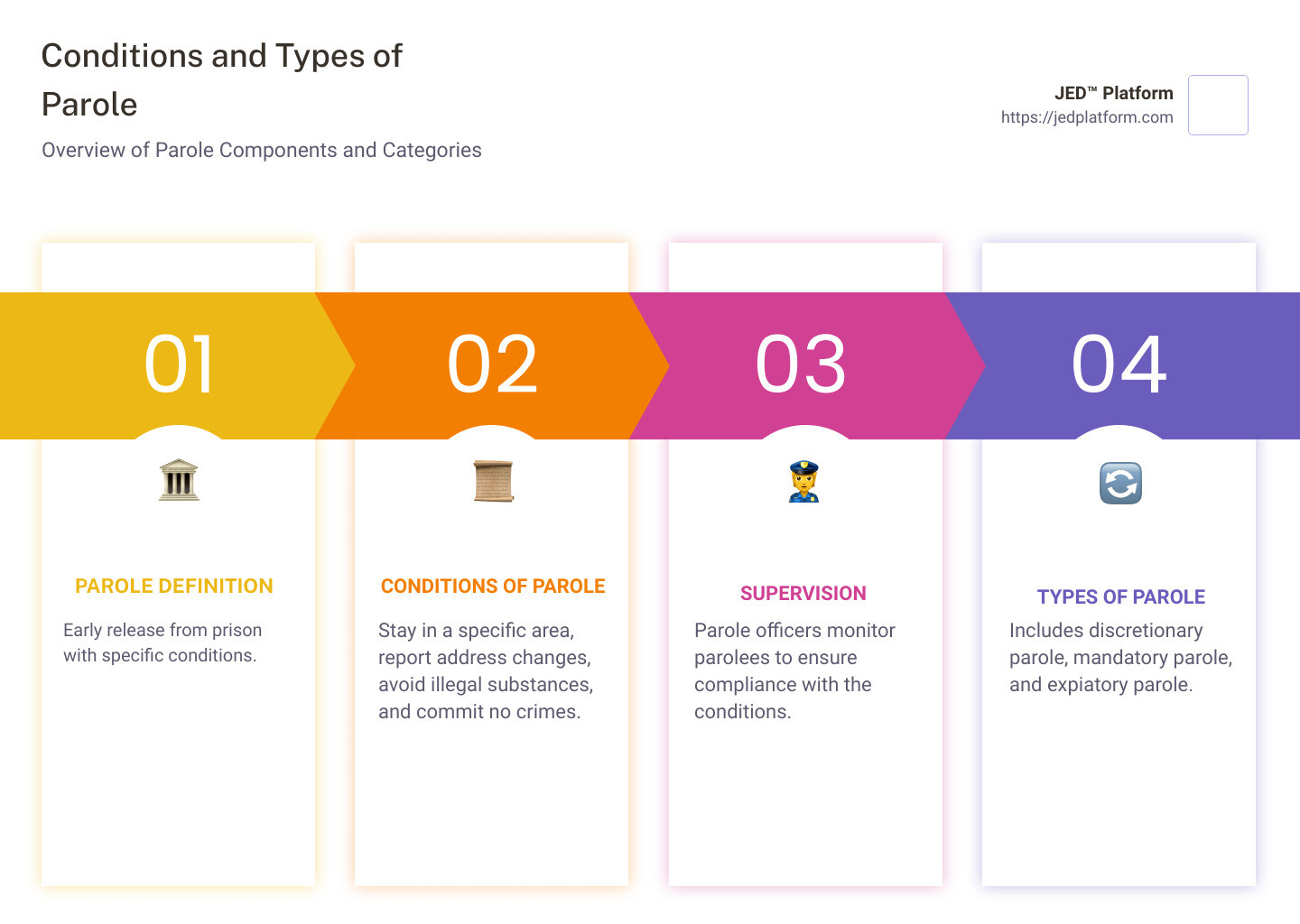
– Parole Definition: Early release from prison with conditions.
– Conditions: Stay in a specific area, report address changes, avoid illegal substances, commit no crimes.
– Supervision: Parole officers monitor parolees.
Parole offers inmates an opportunity to reintegrate into society sooner while adhering to specific rules laid out by a parole board. This supervised freedom comes with conditions that, if violated, can lead to a return to prison.
Parole not only assists prisoners in transitioning back to everyday life but also helps reduce prison populations and manage correctional costs.
What is Parole?
Define Parole
Parole is a conditional release from prison before a sentence is fully served. A parole board decides if an inmate is eligible for parole. If granted, the parolee must follow specific rules under the supervision of a parole officer.
The conditions often include:
- Staying within a certain area
- Reporting any changes of address
- Avoiding illegal substances
- Not committing new crimes
If these conditions are violated, the parolee may return to prison after a hearing.
Types of Parole
There are three main types of parole: discretionary parole, mandatory parole, and expiatory parole.
-
Discretionary Parole: Granted based on good behavior and the parole board’s decision. The board considers factors like the inmate’s rehabilitation efforts and plans for reintegration into society.
-
Mandatory Parole: Automatically granted after a certain portion of the sentence is served, as defined by law. This type does not depend on the parole board’s discretion but is often included as part of the sentencing.
-
Expiatory Parole: This is less common and involves release after serving a specific portion of the sentence, usually under conditions that reflect the seriousness of the crime and the inmate’s behavior.
Each type of parole serves to balance the need for public safety with the goal of rehabilitating offenders and easing their transition back into society.
How Does Parole Work?
Parole Hearing Process
The parole hearing is a crucial step in determining whether an inmate is granted parole. When an inmate becomes eligible for parole, the parole board reviews their case. Eligibility can vary by state and is often based on the type of crime and the inmate’s behavior in prison.
During the hearing, the parole board assesses several factors:
- Nature and circumstances of the original crime
- Behavior and rehabilitation efforts while incarcerated
- Plans for housing, employment, and education after release
- Support system, including family and community ties
The inmate can present witnesses, such as family members or friends, to speak on their behalf. Victims of the crime may also testify. The parole board considers all this information to decide if the inmate poses a risk of re-offending.
If the parole board grants parole, the inmate is released under specific conditions. If denied, the inmate may have to wait for another hearing, which could be months or years away.
Conditions of Parole
Once released, parolees must follow strict conditions to remain out of prison. These conditions ensure that parolees integrate back into society while being monitored for good behavior. Here are some common parole conditions:
- Supervision: Parolees must regularly meet with a parole officer who monitors their progress and compliance with parole conditions.
- Geographical area: Parolees usually need to stay within a certain area and cannot leave without permission.
- Address changes: Any change in residence must be reported immediately to the parole officer.
- Illegal substances: Parolees must refrain from using illegal drugs or alcohol. They may be required to undergo regular drug testing.
- Additional crimes: Committing any new crimes can result in immediate return to prison.
For example, if a parolee commits an assault, they will likely be sent back to prison. However, minor infractions, like a traffic violation, might not lead to re-incarceration.
These conditions help parolees maintain a law-abiding lifestyle and support their transition back into the community. Violating these conditions can result in a hearing where the parole board decides if the parolee should return to prison.
Parole is a complex but essential part of the criminal justice system, balancing public safety and rehabilitation.

History and Development of Parole
Modern Development
The modern concept of parole can be traced back to Alexander Maconochie, a Scottish geographer and captain in the Royal Navy. In 1840, Maconochie was appointed superintendent of the British penal colonies on Norfolk Island, Australia. He introduced a idea to prepare prisoners for their return to society.
Maconochie’s system involved three grades:
- First Grade: Prisoners earned promotions through good behavior, labor, and study.
- Second Grade: Continued good behavior allowed prisoners to advance further.
- Third Grade: Conditional liberty outside of prison, with the requirement to obey rules. Violations would send them back to prison to start over.
This method, known as the “three-grade process,” laid the foundation for the world’s first parole system. Maconochie also reformed the “ticket of leave” system, which allowed prisoners to serve indeterminate sentences. They could be released early if they showed evidence of rehabilitation through a graded classification system based on a unit of exchange called a “mark.” Prisoners earned marks through good behavior and lost them through bad behavior, eventually spending them on passage to higher classification statuses that ultimately conveyed freedom.
Parole in Different Countries
Canada
In Canada, prisoners can apply for full parole after serving one-third of their sentences. They can also apply for day parole before being eligible for full parole. Source
China
China often grants medical parole or compassionate release, allowing prisoners to receive medical treatment not available in prison. This method is sometimes used to release wrongly convicted prisoners less publicly. Source
Israel
Until 2001, parole in Israel was only possible after serving two-thirds of the sentence. A bill passed in 2001, known as the “Deri Law,” allowed early release after half the prison term to ease overcrowding. Source
Italy
In Italy, libertà condizionata is covered by Article 176 of the Italian Penal Code. Prisoners are eligible if they have served at least 30 months, or 26 years for life sentences. Source
New Zealand
In New Zealand, inmates serving short sentences (up to two years) are automatically released after serving half their sentence. Those with longer sentences are seen by the New Zealand Parole Board after serving one-third of their sentence. Source
United Kingdom
In the UK, the Parole Board handles the release of prisoners with indeterminate sentences and some determinate sentences. The conditions of release are known as a licence, and parole is called release on licence. Source
United States
Parole in the U.S. has been politically divisive. Since the 1970s, many states have tightened penal policies, resulting in longer sentences. At least sixteen states have removed the option of parole entirely. However, parole was revisited in the 1980s to manage prison populations and reduce budget strains, leading to increased supervision practices. Source
Parole vs. Probation
Parole and probation are both alternatives to incarceration, but they are different in several key ways.
Key Differences
1. Timing:
– Parole is a post-sentence release. It happens after an individual has served part of their prison sentence.
– Probation is a pre-sentence alternative. It allows individuals to serve their sentences in the community instead of going to prison.
2. Supervision:
– People on parole are supervised by a parole officer.
– People on probation are supervised by a probation officer.
3. Authority:
– Parole is granted by a parole board after reviewing the inmate’s behavior and rehabilitation progress.
– Probation is typically ordered by a judge at the time of sentencing.
4. Conditions:
– Both parole and probation come with conditions. However, parole conditions are often stricter because the individual has already spent time in prison. These conditions may include regular check-ins, staying within a specific area, and attending rehabilitation programs.
5. Consequences:
– Violating parole can send an individual back to prison to serve the remainder of their sentence.
– Violating probation can lead to imprisonment, but the individual may also face additional probation conditions or an extended probation period.
Similarities
1. Supervision:
– Both parolees and probationers are supervised to ensure they comply with specific conditions.
2. Conditions:
– Both must follow court-ordered conditions such as attending counseling, avoiding illegal substances, and maintaining employment.
3. Rehabilitation:
– Both aim to rehabilitate the individual and help them reintegrate into the community. Programs may include job training, substance abuse treatment, and educational opportunities.
4. Community Integration:
– Both parole and probation focus on helping individuals become productive members of society while reducing the risk of re-offending.
Understanding these differences and similarities helps clarify how the criminal justice system provides structured opportunities for offenders to reintegrate into society while still holding them accountable.
Frequently Asked Questions about Parole
What is the Simple Definition of Parole?
Parole is a conditional release from prison. It allows inmates to serve the rest of their sentence outside of prison under supervision. This is not a right but a privilege granted by a parole board.
Parolees must follow specific rules, or they risk going back to prison.
What Does it Mean to be Put on Parole?
Being put on parole means you are released from prison before your sentence is fully served. However, you must comply with various conditions and are under the watch of a parole officer.
Here are some typical conditions:
- Stay in a specific geographical area
- Report regularly to a parole officer
- Avoid illegal substances
- Get permission for address changes
Failure to meet these conditions can lead to revocation of parole and a return to prison.
What are the Three Types of Parole?
There are three main types of parole:
-
Discretionary Parole: This is granted by a parole board based on an inmate’s behavior and readiness to rejoin society. It’s not guaranteed and is considered a privilege.
-
Mandatory Parole: This type is automatically granted after an inmate serves a certain portion of their sentence, as specified by law. It’s often included as part of the sentencing.
-
Expiatory Parole: This is less common and involves release due to special circumstances, such as medical issues or compassionate grounds.
Understanding these types helps clarify how parole decisions are made and what inmates can expect during their parole period.
In the next section, we’ll dive into the history and development of parole, tracing its origins and how it has evolved over time.
Conclusion
Parole plays a crucial role in the criminal justice system. It allows for the conditional release of inmates, giving them a chance to reintegrate into society while being monitored. This system focuses on rehabilitation rather than just punishment, aiming to help former inmates become productive members of their communities.
Rehabilitation is central to the parole process. Parolees must follow specific conditions, such as attending counseling, avoiding illegal substances, and maintaining employment. These conditions are designed to support their transition and reduce the likelihood of reoffending.
Community integration is another essential aspect of parole. By allowing parolees to live and work in the community, the system helps them rebuild their lives and relationships. This integration is vital for their successful reintegration and long-term stability.
At JED™ Platform, we understand the complexities of the parole system. We offer comprehensive pretrial and post-conviction programs designed to support individuals at every stage of their journey. From risk assessments to supervision and rehabilitation services, our goal is to ensure a smooth transition and successful reintegration into society.
If you or someone you know is navigating the parole process, our team at JED™ Platform is here to help. Visit our website for more information on how we can assist you.
By understanding parole, its focus on rehabilitation, and the importance of community integration, we can better appreciate its role in the criminal justice system and its impact on individuals and society as a whole.