

A Guide to the DOC Work Release Program
DOC Work Release Program: Top Benefits & Challenges 2024

Understanding the DOC Work Release Program
The DOC work release program is designed to help incarcerated individuals reintegrate into society by allowing them to work outside of the correctional facility while serving their sentences. This program aims to reduce recidivism and support successful reentry by providing employment opportunities and essential skills training.
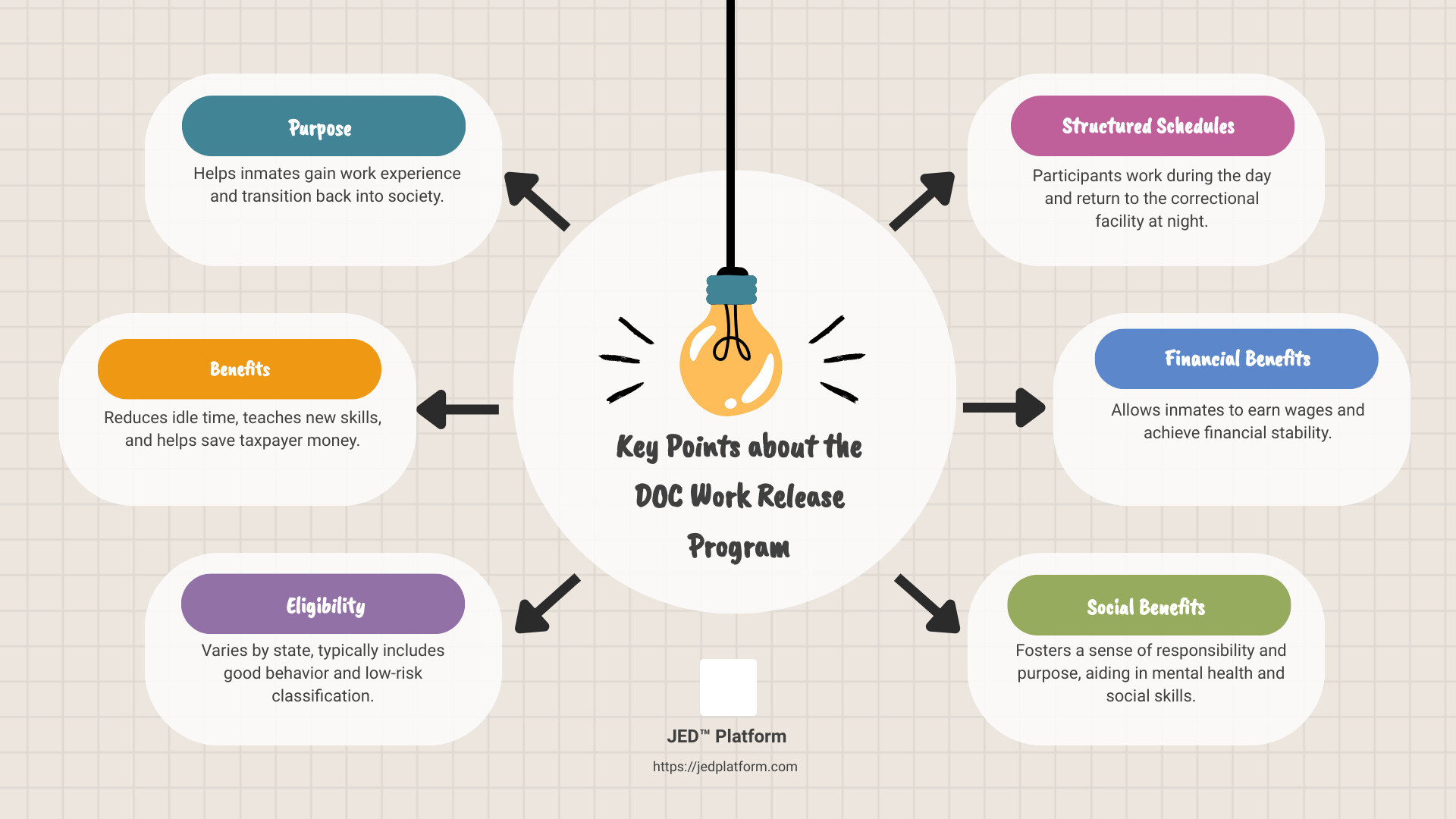
Key points about the DOC work release program:
- Purpose: Helps inmates gain work experience and transition back into society.
- Benefits: Reduces idle time, teaches new skills, helps save taxpayer money.
- Eligibility: Varies by state, typically includes good behavior and low-risk classification.
Participants in the DOC work release program have structured schedules, which include working during the day and returning to their correctional facility at night. This setup not only provides financial benefits by allowing inmates to earn wages but also offers social and psychological benefits by fostering a sense of responsibility and purpose.
Eligibility Criteria for DOC Work Release Programs
To join a DOC work release program, individuals must meet specific criteria. These criteria ensure that only those who are likely to benefit from the program and pose minimal risk to the community are selected.
General Eligibility
General eligibility for DOC work release programs typically includes:
- Sentencing Requirements: Individuals must not be serving sentences for serious crimes like murder or aggravated kidnapping. Specific offenses that disqualify someone vary by state.
- Security Classification: Only those with a minimum-security classification are considered. This classification indicates that the individual poses a low risk of escape or causing harm.
- Behavioral Standards: Good behavior is crucial. Individuals must have a clean disciplinary record for a specified period before applying.
- Risk Assessment: A positive risk and needs assessment is required. This assessment evaluates the individual’s likelihood of reoffending and their needs for successful reintegration.
State-Specific Eligibility
While the general criteria apply broadly, each state has its own specific rules for eligibility in their DOC work release programs. Let’s take a look at the requirements in Louisiana, Illinois, and Florida.
Louisiana
In Louisiana, the eligibility for work release includes:
- Sentencing Requirements: Individuals must be serving time for a non-violent, non-sexual offense.
- Behavioral Standards: They must have a clean disciplinary record for at least 12 months.
- Risk Assessment: A thorough risk assessment is conducted to ensure they are suitable for community placement.
Illinois
Illinois has detailed criteria outlined in Ill. Admin. Code tit. 20 § 455.30:
- Sentencing Requirements: Individuals must not be serving sentences for severe crimes like murder, Class X felonies, or large-scale narcotics trafficking.
- Timeframe: For pre-release placement, they must have between 2 to 30 months remaining on their sentence.
- Behavioral Standards: They must be in “A” grade and have no serious disciplinary actions within the last 45 days.
- Security Classification: Minimum security classification is required.
- Medical Clearance: No acute medical or dental problems that need resolution before transfer.
Florida
In Florida, the eligibility criteria include:
- Sentencing Requirements: Individuals must not be serving sentences for severe crimes such as murder or sexual offenses.
- Behavioral Standards: They must have a clean disciplinary record and demonstrate good behavior.
- Security Classification: Minimum security classification is necessary.
- Risk Assessment: A positive risk assessment is required, similar to other states.
Each of these states has custom their criteria to ensure that the right individuals are selected for the program, balancing the benefits of work release with the need to maintain public safety.
How the DOC Work Release Program Works
The DOC work release program aims to help incarcerated individuals transition back into society by allowing them to work or attend school while serving their sentences. Here’s a look at how the program is structured, supervised, and varies by state.
Level System in Illinois
Illinois uses a tiered level system to manage participants in its work release program. The system helps ensure a gradual transition back into the community, with increasing levels of freedom and responsibility.
Orientation Status
– Duration: Initial phase, typically short.
– Activities: Basic orientation and adjustment to the work release environment.
– Supervision: Close monitoring.
Level I
– Independent Release Time: None.
– Supervised Activities: One three-hour volunteer or intern-supervised activity per week.
– Leaves: One leave per month.
Level II
– Independent Release Time: Up to 6 hours per week.
– Supervised Activities: Continued participation in approved activities.
– Leaves: Two leaves per month.
Level III
– Independent Release Time: Up to 9 hours per week.
– Supervised Activities: Continued participation in approved activities.
– Leaves: Three leaves per month.
Level IV
– Independent Release Time: Up to 12 hours per week.
– Supervised Activities: Continued participation in approved activities.
– Leaves: Four leaves per month, with potential extended home and family leaves during the last 60 days prior to release.
This structured approach helps incarcerated individuals gradually adapt to more freedom while ensuring they remain accountable and supervised.
Work Release in Different States
While the core concept of work release remains the same, the specifics can vary significantly from state to state. Let’s look at how Louisiana, Illinois, and Florida implement their programs.
Louisiana
– Program Structure: Participants are selected based on their eligibility and are placed in jobs that are often labor-intensive.
– Supervision: Close monitoring by corrections staff and regular check-ins.
– Employment: Jobs typically include manual labor, such as highway maintenance or agricultural work.
– Community Integration: Limited, with most activities closely supervised.
Illinois
– Program Structure: Uses a level system, as described above.
– Supervision: Gradual reduction in supervision as individuals progress through the levels.
– Employment: Participants can work in various industries, including manufacturing, food service, and retail.
– Community Integration: Increased freedom and community interaction as individuals move up the levels.
Florida
– Program Structure: Similar to Illinois, but with a focus on work camps.
– Supervision: Participants are often seen working on highways and public lands under strict supervision.
– Employment: Jobs are usually manual and can include road maintenance and public works.
– Community Integration: Limited, with most activities closely monitored.
Program Structure and Supervision
In all states, the DOC work release program is designed to provide structure and supervision while allowing individuals to gain work experience and transition back into society. Participants must maintain employment or attend school and return to the correctional facility when not engaged in approved activities.
Supervision varies by state but generally includes regular check-ins, monitoring of employment status, and adherence to strict schedules. This ensures that participants remain accountable and that public safety is maintained.
Employment and Community Integration
Employment is a key component of the work release program. It provides participants with the opportunity to earn money, develop job skills, and build a work history. This not only helps them financially but also prepares them for life after release.
Community integration is another crucial aspect. By allowing participants to work and interact with the community, the program helps them rebuild relationships and develop the social skills needed for successful reintegration.
In summary, the DOC work release program offers a structured and supervised way for incarcerated individuals to transition back into society. With varying levels of freedom and responsibility, it helps participants gain valuable work experience and integrate into the community, reducing the likelihood of reoffending.

Next, we’ll explore the benefits of the DOC work release program, including financial, social, and psychological advantages.
Benefits of the DOC Work Release Program
Financial Benefits
Employment and Earnings
The DOC work release program allows inmates to work while serving their sentences. This means they can earn an income, which is crucial for financial stability post-release. Inmates can save money for their reintegration, covering costs like housing, food, and transportation.
Savings and Financial Stability
Many inmates in work release programs can save a significant amount of money. For example, some women at the Fox Valley Adult Transition Center in Illinois have successfully saved thousands of dollars. This financial cushion helps them start a new life after release, reducing the risk of falling back into criminal activities due to financial desperation.
Social and Psychological Benefits
Mental Health and Social Skills
Participating in a work release program can positively impact mental health. Inmates develop a routine, gain a sense of purpose, and improve their self-esteem through productive work. Additionally, working alongside others helps them build essential social skills, which are crucial for successful reintegration.
Family Connections
Maintaining family ties is another significant benefit. Inmates who work and earn money can support their families, which strengthens these relationships. Moreover, being engaged in meaningful work makes it easier for them to reconnect with their loved ones, providing a shared sense of purpose and achievement.
Recidivism Reduction
One of the most notable benefits is the reduction in recidivism rates. By gaining work experience and saving money, inmates are less likely to reoffend. The skills and financial stability they acquire make it easier for them to find employment and integrate into society, lowering the chances of returning to prison.
Community Reintegration
Finally, the program aids in community reintegration. Inmates get to interact with the community, building trust and understanding. This interaction helps them feel like a part of the community, making the transition smoother and more successful.
Next, we’ll discuss the challenges and solutions in DOC work release programs, focusing on healthcare costs, state IDs, and gender disparities.
Challenges and Solutions in DOC Work Release Programs
Healthcare Costs
One of the major challenges in the DOC work release program is the high cost of healthcare. Many inmates in work-release facilities are responsible for their own medical expenses. This can lead to significant financial stress, especially for those with ongoing medical conditions.
Gender Disparities
There are notable gender disparities in healthcare access. For example, a report by the John Howard Association found that only 4% of women at Illinois’ Fox Valley Adult Transition Center were enrolled in Medicaid, compared to 41% at a similar men’s facility. This disparity forces many women to either absorb medical debt or forgo necessary care.
Possible Solutions
1. Medicaid Enrollment: Ensuring that all eligible inmates are enrolled in Medicaid can alleviate some of these financial burdens.
2. Employer Insurance: Encouraging employers of work-release inmates to provide health insurance could also help.
3. State Funding: Allocating more state resources to cover medical expenses for work-release inmates, especially women, could bridge the gap.
State ID Issues
Obtaining a state ID is another significant hurdle for inmates in work-release programs. A state ID is crucial for employment, housing, and accessing social services, but the process to obtain one is often complicated and costly.
Identification Requirements
To get a state ID, inmates need other forms of identification, such as a birth certificate, which can cost around $20. This expense, along with the need to arrange transportation to government offices, can be prohibitive.
Possible Solutions
1. Automatic Issuance: Upon release, the state could automatically provide a state ID, as suggested by Jennifer Vollen-Katz of the John Howard Association.
2. Fee Waivers: Waiving the fees for necessary identification documents can remove financial barriers.
3. Mobile Services: Implementing mobile services that bring ID application processes to the inmates can solve transportation issues.
Gender Disparities
The challenges faced by women in work-release programs often differ from those faced by men, primarily due to resource allocation and systemic inefficiencies.
Resource Allocation
Women in work-release programs often receive fewer resources compared to their male counterparts. This includes access to healthcare, educational programs, and even basic amenities like cell phones, which are essential for safety and communication.
Possible Solutions
1. Equal Resource Distribution: Ensuring that women receive the same level of resources as men can help bridge the gap.
2. Policy Reforms: Revising policies to address these disparities can lead to more equitable treatment.
3. Awareness and Advocacy: Increasing awareness and advocacy for women’s issues in work-release programs can drive systemic change.
Next, we’ll answer some frequently asked questions about DOC work release programs, including who is eligible in different states and how these programs operate.
Frequently Asked Questions about DOC Work Release Programs
Who is eligible for work release in Louisiana?
In Louisiana, eligibility for the DOC work release program is primarily determined by the nature of the inmate’s sentence. Generally, inmates sentenced to hard labor are considered for work release. However, not all inmates are automatically eligible. Factors such as behavior, risk assessment, and time served play crucial roles.
Inmates must demonstrate good behavior and meet specific criteria set by the state. These criteria are designed to ensure the safety and success of both the inmate and the community.
How does work release work in Illinois?
In Illinois, the DOC work release program is managed by the Illinois Department of Corrections (IDOC). Inmates eligible for work release are typically housed in community correctional centers. These centers provide a structured environment that allows inmates to work during the day and return to the facility at night.
Inmates in Illinois may have “independent release time,” which means they can leave the facility for work, education, or other approved activities. This time is closely monitored to ensure compliance with the program’s rules and to maintain public safety.
What is the program sentence credit in Illinois?
In Illinois, inmates can earn sentence credits through various programs designed to promote education, life skills, and behavioral modification. These credits can reduce the length of an inmate’s sentence, allowing for earlier release.
There are three main types of sentence credits in Illinois:
1. Statutory Sentence Credit: This is based on the percentage of the sentence that must be served, determined by the nature of the offense. For example, an inmate convicted of burglary might serve 50% of their sentence.
2. Program Sentence Credit: Inmates can earn credits by participating in approved educational or life skills programs.
3. Earned Sentence Credit: This is awarded for positive behavior and participation in rehabilitation programs.
These credits incentivize inmates to engage in productive activities that can aid in their reintegration into society.
Next, we’ll explore the challenges and solutions in DOC work release programs, including healthcare costs and state ID issues.
Conclusion
In summary, the DOC Work Release Program offers a structured pathway for inmates to transition back into society. Through employment, skill development, and community integration, these programs aim to reduce recidivism and foster positive social contributions.
At JED™ Platform, we are committed to supporting effective criminal justice reforms. Our focus is on pretrial diversion programs, fair risk assessments, and comprehensive monitoring services. These efforts ensure that individuals are given a fair chance to reintegrate and succeed post-incarceration.
Pretrial diversion programs help individuals awaiting trial by providing fair and unbiased assessments of their risk levels. This helps determine whether they can be safely released into the community before their trial. By monitoring and supervising defendants, we ensure compliance with court-ordered conditions and scheduled court hearings.
Fair risk assessments are crucial in deciding the appropriate level of supervision and support for each individual. Our assessments are designed to be comprehensive and unbiased, ensuring that every individual receives the attention and resources they need.
Monitoring services play a key role in both pretrial and post-conviction stages. We provide the necessary oversight to ensure that individuals comply with their conditions of release, attend required programs, and make positive strides towards reintegration.
For more information on our balanced approach to criminal justice reform, visit our JED™ Platform service page.
By focusing on these key areas, we aim to support a fair and effective criminal justice system that benefits individuals and society as a whole.