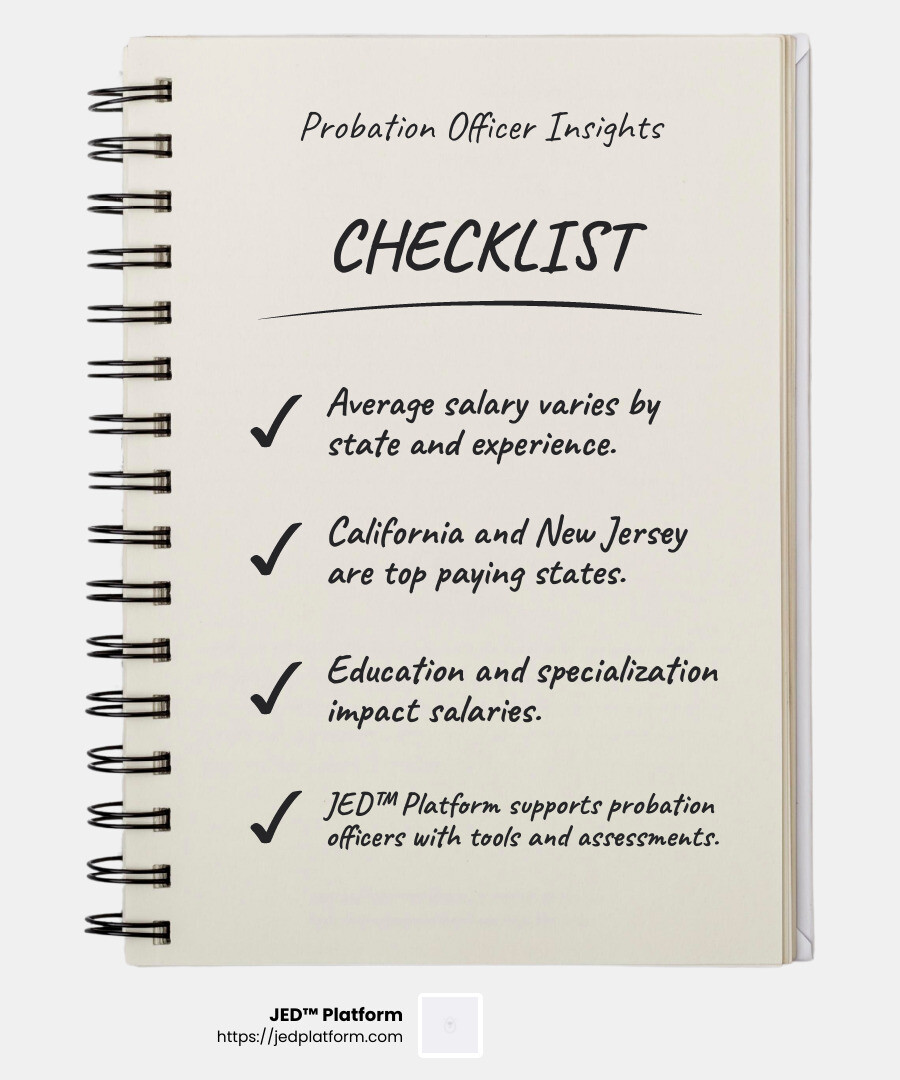

Probation Officer Pay: Understanding the Averages
Average Probation Officer Salary: Top 2024 Insights

Understanding Probation Officer Salaries
Average probation officer salary is a key consideration for those pursuing a career in criminal justice. In California, the median salary for probation officers stands at $75,780, highlighting the financial benefits of this essential role in the state.
Probation officers play a critical role in our society. They help offenders rehabilitate while monitoring their compliance with court-ordered conditions. Their work is crucial in maintaining safety and promoting positive reintegration into the community. Understanding how much these professionals earn is vital for those considering this career path or those managing these programs.
Here’s a quick breakdown of probation officer salaries in California:
- Median Salary: $75,780
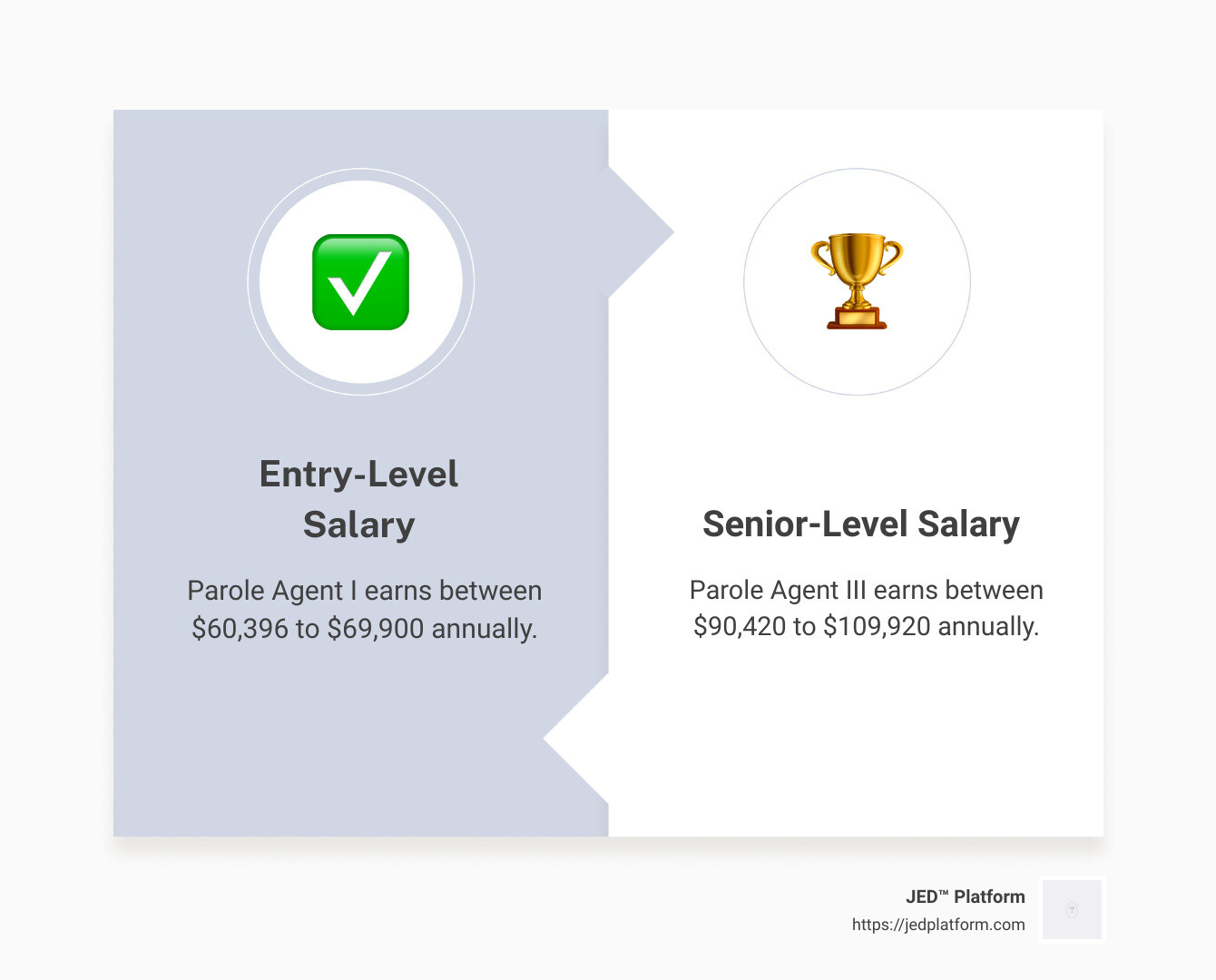
- Parole Agent I (1-5 years): $60,396 to $69,900
- Parole Agent II (1-10 years): $80,232 to $97,452
- Parole Agent III: $90,420 to $109,920
These figures show a range that highlights career growth and potential increases with experience and specialization.
Simple guide to average probation officer salary terms:
– probation officer hourly pay
– highest paying states for probation officers
– federal probation officer pay scale
Average Probation Officer Salary
When considering a career as a probation officer, understanding the average probation officer salary is essential. In California, the median salary for probation, parole, and juvenile probation officers is $75,780. This figure reflects the importance and responsibility of the role within the criminal justice system.
Salary Comparisons
Probation officer salaries can vary based on experience, specialization, and geographic location. Here’s how probation officer salaries stack up against related roles:
- Parole Agent I: Starting salaries range from $60,396 to $69,900 for those with 1-5 years of experience.
- Parole Agent II: With 1-10 years of experience, salaries range from $80,232 to $97,452.
- Parole Agent III: These agents earn between $90,420 and $109,920, reflecting their advanced experience and specialization.
This comparison shows that probation officers earn competitive salaries, with opportunities for increases as they gain experience or move into specialized roles.
Salary Data Across Regions
The salary for probation officers can also vary significantly by state and even by county within states. California is known for its higher salaries in this field, but comparing these figures with national averages can provide a clearer picture of where probation officers stand financially.
- National Median Salary: While specific national data for probation officers isn’t provided in the research, the median salary in California is often above the national average due to the state’s cost of living and demand for skilled professionals in this sector.
Understanding these salary ranges and comparisons helps prospective probation officers gauge their potential earnings and career growth. It also underscores the value placed on their role in the justice system.
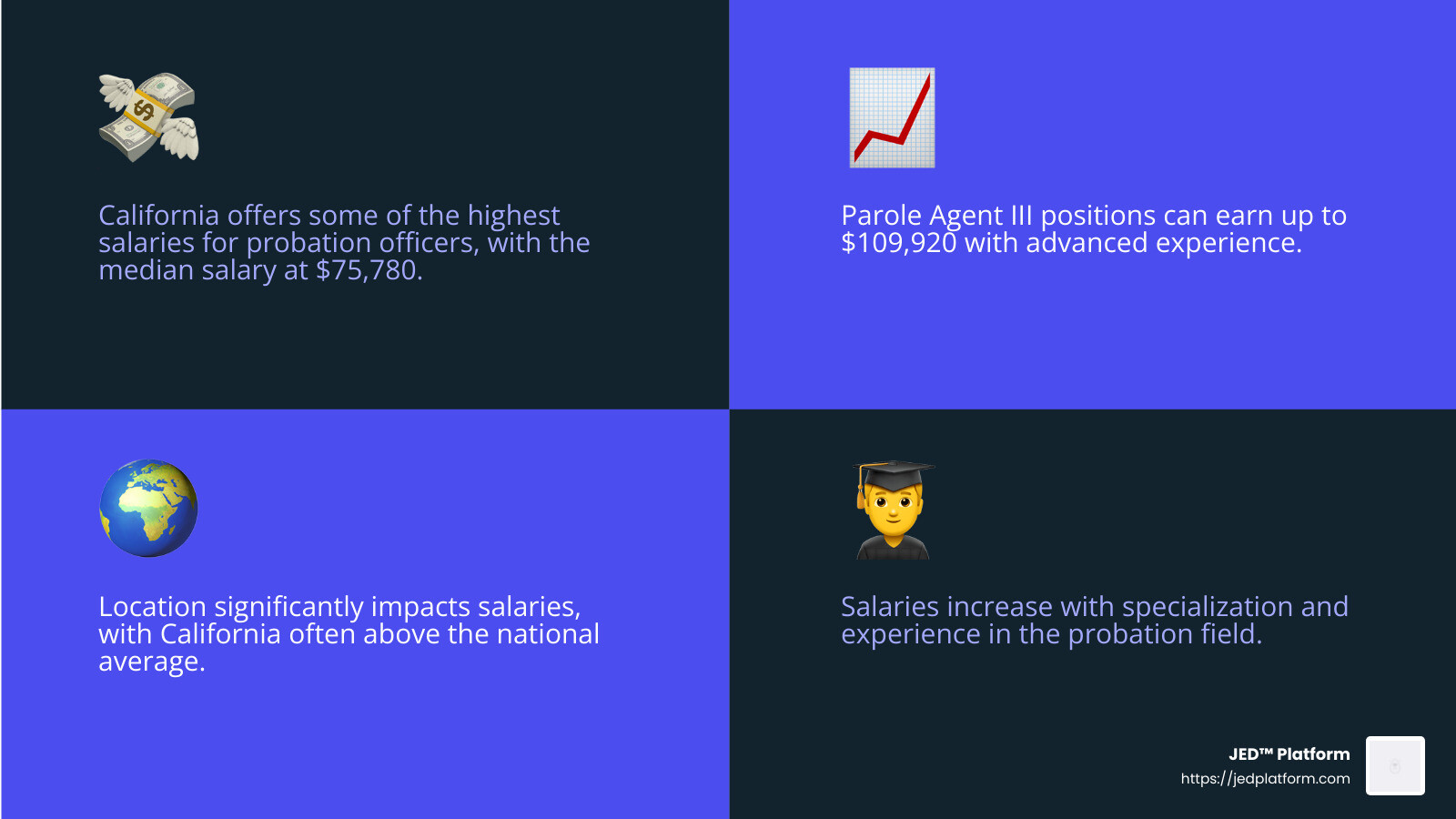
This data highlights the financial rewards of pursuing a career as a probation officer, particularly in states like California, where salaries are notably higher. As you explore this career path, consider how factors such as experience, location, and specialization can influence your earning potential.
Factors Influencing Probation Officer Salaries
When exploring the average probation officer salary, several key factors come into play. Understanding these can help you better steer your career path in this field.
Experience Level
Experience is a major factor in determining salary levels for probation officers. As professionals gain more years of service, their earning potential typically increases.
- Entry-Level (1-5 years): New probation officers might start with salaries at the lower end of the scale.
- Mid-Career (6-15 years): Salaries tend to rise significantly as officers gain more experience and possibly take on more complex cases.
- Experienced (16+ years): Those with extensive experience or who move into supervisory roles can see substantial salary increases.
This progression is similar to that seen in other law enforcement roles, such as parole agents, where more experience often leads to higher pay brackets.
Location Impact
Geographic location plays a crucial role in salary variations for probation officers. In California, for example, salaries are generally higher due to the state’s cost of living and demand for skilled professionals.
- High-Cost Areas: In counties with a higher cost of living, such as those in urban centers, salaries are often adjusted upwards to compensate.
- Rural vs. Urban: Urban areas tend to offer higher salaries compared to rural regions, reflecting the increased demand and cost of living.
In California, each of the 58 counties operates its own probation department, which can lead to variations in salary even within the state.
Education Requirements
Education is another important factor influencing salaries. While a bachelor’s degree is typically required to become a probation officer, additional education and certifications can improve earning potential.
- Bachelor’s Degree: This is the standard requirement for entry into the field.
- Advanced Degrees: Holding a master’s degree or specialized certifications can lead to higher salaries and opportunities for advancement.
Investing in education not only prepares you for the responsibilities of the role but can also significantly impact your salary trajectory.
These factors—experience, location, and education—are crucial in shaping salary expectations for probation officers. Understanding them can help you make informed decisions about your career path and potential earnings.
Top Paying States for Probation Officers
When considering a career as a probation officer, know where you might earn the most. California and New Jersey stand out as top-paying states for probation officers. Let’s explore why these states offer higher salaries and how they compare.
California
California is one of the highest-paying states for probation officers, with a median salary of $75,780, as reported by the U.S. Department of Labor. This figure is influenced by several factors:
- Cost of Living: California’s high cost of living, particularly in urban areas like Los Angeles and San Francisco, drives up salaries. To attract and retain skilled professionals, salaries must be competitive.
- County Variations: With 58 counties, each operating its own probation department, there’s significant salary variation within the state. Counties with larger urban centers typically offer higher salaries to match living expenses and the demand for services.
New Jersey
New Jersey is another state where probation officers can expect to earn above-average salaries. The state’s proximity to major metropolitan areas like New York City contributes to higher pay:
- Proximity to NYC: The cost of living near New York City influences salaries, as professionals often need compensation that matches the area’s expenses.
- State Initiatives: New Jersey has invested in criminal justice reforms and community programs, increasing the demand for qualified probation officers and, consequently, their salaries.
Salary Variations
While California and New Jersey lead in average salaries, it’s important to note that salaries can vary widely based on location and demand:
- Urban vs. Rural: Urban areas tend to offer higher salaries due to increased living costs and demand for services. In contrast, rural areas might offer lower salaries but with a lower cost of living.
- State Policies: Different states have varying levels of investment in their probation systems, which can impact salary levels. States prioritizing community corrections and rehabilitation may offer higher pay to attract skilled professionals.
Understanding these salary variations can help you make informed decisions about where to pursue a career as a probation officer. The right location can significantly impact your earning potential and overall job satisfaction.
How to Become a Probation Officer
Becoming a probation officer is not just about earning a paycheck; it’s a career dedicated to helping individuals reintegrate into society. Below is a straightforward guide to understanding the career path, educational requirements, and job growth for probation officers.
Career Path
-
Entry-Level Positions: Start as a probation officer trainee or assistant. This role provides foundational experience in monitoring and supporting individuals on probation.
-
Probation Officer: With experience and training, you can advance to a full probation officer role. Here, you’ll work directly with offenders, creating rehabilitation plans and ensuring compliance with court orders.
-
Senior Roles: As you gain more experience, you can move into senior or supervisory positions. These roles involve overseeing other officers and managing more complex cases.
-
Specializations: Some probation officers specialize in areas like juvenile probation or substance abuse cases. Specializations often require additional training or certifications.
Educational Requirements
-
Bachelor’s Degree: Most probation officer positions require a bachelor’s degree in criminal justice, psychology, social work, or a related field. This education provides the necessary background in law, human behavior, and the criminal justice system.
-
Training Programs: After being hired, probation officers typically undergo a state-mandated training program. This training covers legal procedures, counseling techniques, and case management skills.
-
Certifications and Licenses: Some states require probation officers to pass a certification exam or obtain a license. Check your state’s requirements to ensure compliance.
Job Growth
The demand for probation officers is expected to grow in the coming years. Several factors contribute to this trend:
-
Criminal Justice Reforms: There’s a growing focus on rehabilitation and community-based corrections rather than incarceration. This shift increases the need for probation officers.
-
Population Growth: As populations grow, so does the potential number of offenders needing supervision, leading to more job opportunities.
-
Retirement of Current Officers: Many current probation officers are reaching retirement age, opening up positions for new recruits.
In summary, becoming a probation officer requires dedication to education, training, and ongoing professional development. With a positive job outlook and the opportunity to make a substantial impact on individuals and communities, it’s a rewarding career choice for those interested in the criminal justice field.
Frequently Asked Questions about Probation Officer Salaries
What is the top salary for a probation officer?
Probation officers can earn a wide range of salaries depending on their experience and the state they work in. In California, for instance, the median salary for probation officers was reported to be $75,780 according to the U.S. Department of Labor’s Occupational Outlook Handbook, 2012-2013 Edition. However, those in senior or specialized roles can earn significantly more. The top salary for a probation officer, especially in supervisory or specialized positions, can exceed $104,772. This reflects the complexity and responsibility of the role, as well as the experience and qualifications of the officer.
How much does a juvenile probation officer make in California?
In California, juvenile probation officers often follow a similar pay scale to their adult counterparts. Entry-level positions start around $60,396 to $69,900 annually for the first five years. With more experience, salaries can rise considerably. For example, after more than a decade of service, a juvenile probation officer could earn between $73,140 and $88,824. The salary increases with years of service and additional responsibilities, reflecting the vital role juvenile probation officers play in supporting young offenders.
What state has the highest paid probation officers?
Salaries for probation officers can vary significantly from state to state. California is known for having some of the highest salaries for probation officers, thanks to its large population and higher cost of living. Other states like New Jersey also rank high on the salary scale for probation officers, often due to similar economic factors. While specific rankings can fluctuate, states with higher living costs typically offer higher salaries to attract and retain skilled professionals in the field.
Conclusion
As we wrap up our discussion on probation officer salaries, it’s important to highlight the role of JED™ Platform in the broader criminal justice industry. Our pretrial software plays a crucial part in supporting individuals awaiting trial. By offering fair risk assessments and effective monitoring services, we help ensure that justice is served while also supporting community safety.
The insights on the average probation officer salary underscore the importance of these roles in maintaining the delicate balance between enforcement and rehabilitation. With salaries varying based on experience, location, and specialization, probation officers are compensated for their critical work in guiding offenders back into society.
In an industry where every decision can significantly impact lives, JED™ Platform is committed to providing innovative solutions that improve the effectiveness and fairness of the justice system. Our focus remains on supporting criminal justice professionals by equipping them with the tools they need to succeed.
For more information on how we support probation officers and the justice system, visit our Probation Officer Pay page.